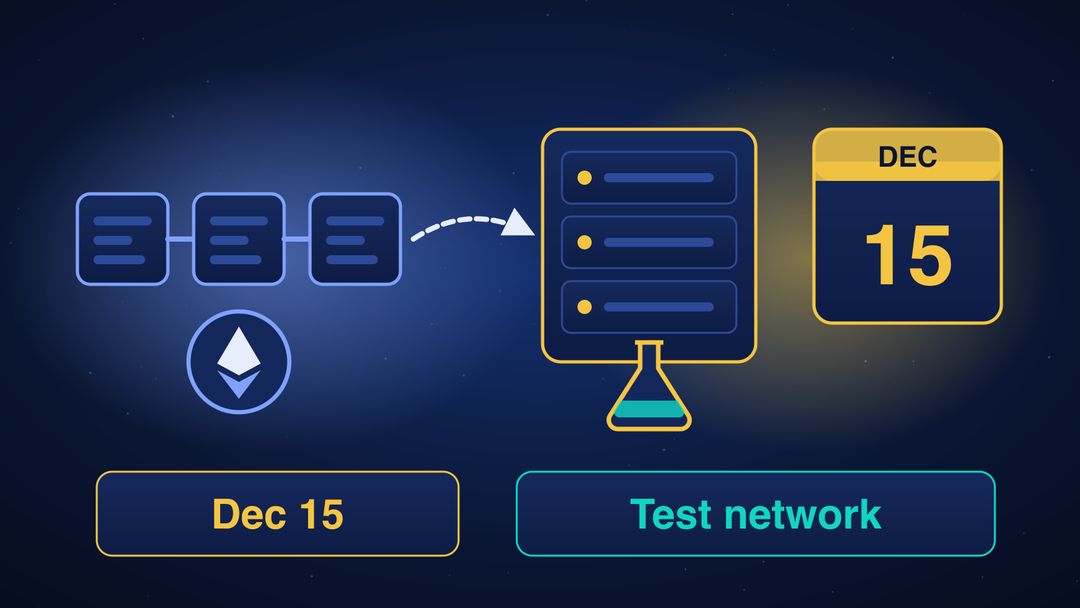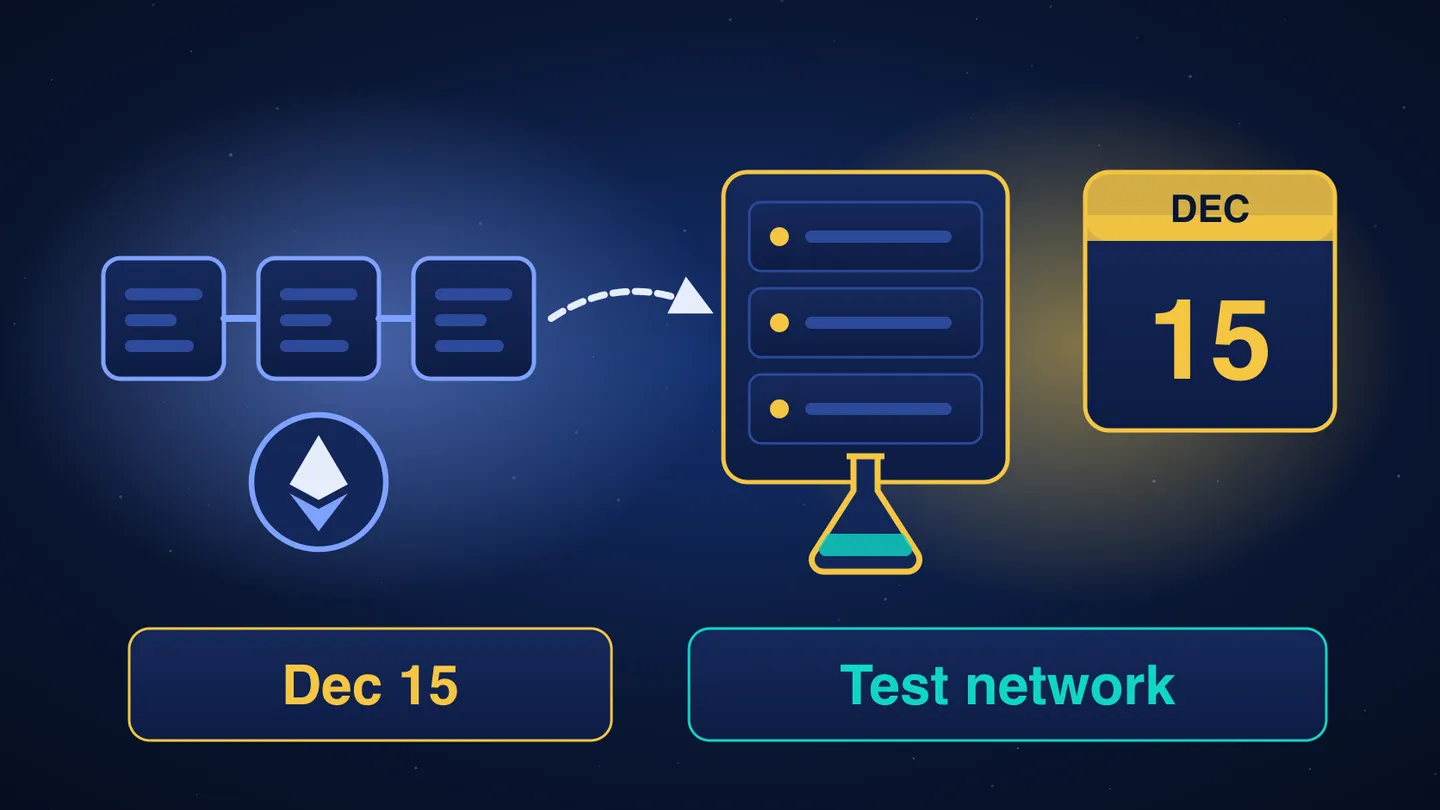
Ethereum’s next big upgrade, called Glamsterdam, has a new test date. On a developer call on Thursday, November 26, 2026, the teams that build Ethereum’s software agreed to switch the upgrade on for the Hoodi test network on Tuesday, December 15, at 19:12 GMT (2:12 p.m. ET). The test was first planned for late October and was called off after a security firm warned that one of the changes could cause problems for existing apps.
Key facts
- The date: Glamsterdam goes live on Hoodi on December 15. Hoodi is a practice copy of Ethereum that uses play money, so mistakes there cost nothing.
- Already tested once: the upgrade has been running on another test network, Sepolia, since October.
- Why it was delayed: the Hoodi test was due on October 26. It was postponed after the security firm ChainSecurity warned that new fee rules could weaken safety checks built into some existing smart contracts, the programs that run on Ethereum.
- The disputed rule stays: developers agreed to ship that fee change, known as EIP-8037, exactly as written, rather than redesign it.
- Main network: no date has been set for the real Ethereum network.
- Next step: the software teams are expected to release Glamsterdam-ready versions of their programs early next week, so the people who run Ethereum computers can install them in time.
What Glamsterdam changes
The upgrade has two headline features:
- Parallel processing: each block will carry a list of everything it touches (called block-level access lists), so computers can check several transactions at the same time instead of one by one.
- Built-in block building: the deal between the people who assemble blocks and the validators who add them to the chain moves inside Ethereum itself (ePBS). Today it mostly runs through outside middlemen.
Together these are meant to let Ethereum handle more activity per block. Glamsterdam follows Fusaka, the previous upgrade, which reached the main network in December 2025.
The fee change behind the delay
EIP-8037 makes it more expensive to create new permanent data on Ethereum, such as a new account or a new smart contract. The goal is to stop the network’s stored data from growing too fast as blocks get bigger. The new cost is also counted separately from the rest of a transaction’s fees. Some older contracts were written with the old prices in mind, so a few of their safety checks may not behave as expected. Developers decided the fixes belong in those apps, not in the rule.
Why it matters
Ethereum is the second-largest cryptocurrency and the network behind most stablecoins and decentralized finance apps, so its upgrades affect a very large number of users. Hoodi is the final big public rehearsal before the main network, which makes this date the clearest sign yet of when Glamsterdam could arrive. For ordinary holders nothing needs to be done. Teams that run apps, wallets or bridges on Ethereum, however, should check whether the new fee rule affects their contracts before the upgrade reaches the main network.
This article is for information only and is not financial advice.