What if your financial app could do more than just hold euros and send transfers?
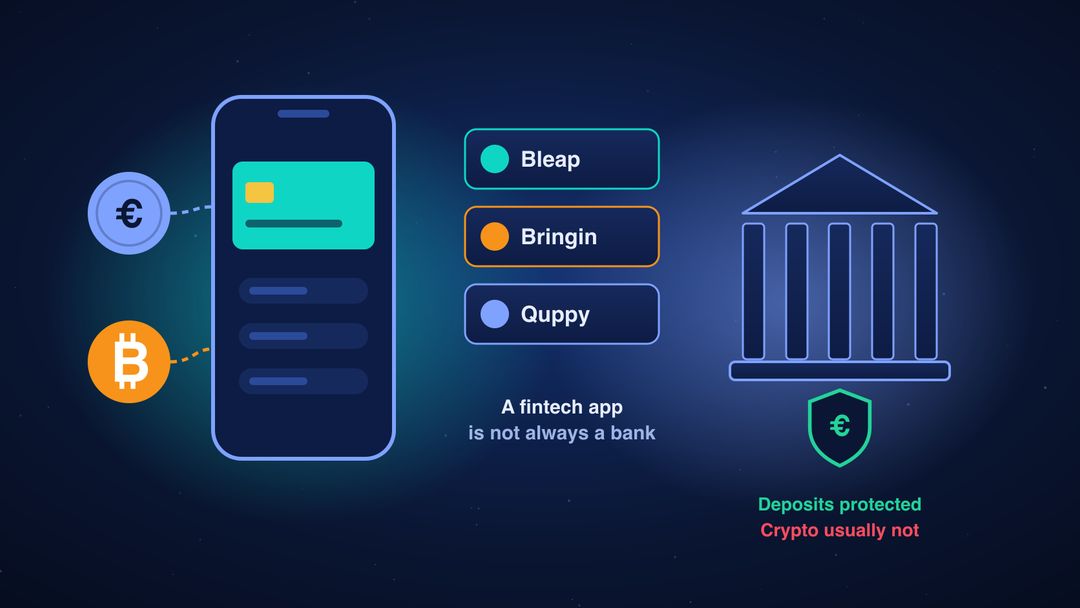
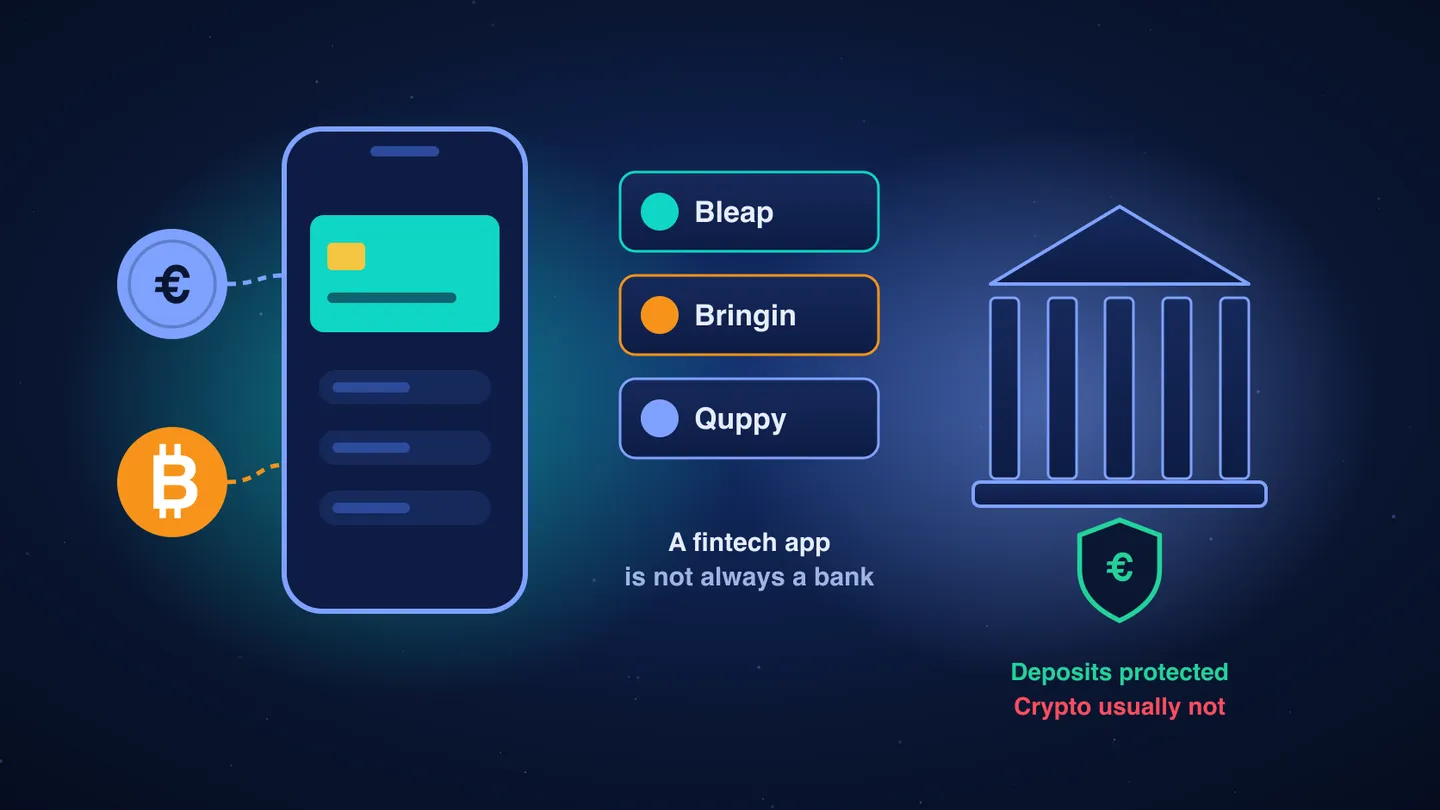
A new generation of fintech platforms is bringing cryptocurrency and everyday payments closer together. Beyond mainstream names like Revolut, apps such as Bleap, Bringin and Quppy offer alternative approaches to managing digital assets and traditional currencies.
1. Bleap: crypto meets everyday spending
Bleap combines payment functionality with a crypto-focused ecosystem. Its self-custody approach aims to give users greater control over their digital assets, depending on the specific service and wallet configuration.
2. Bringin: Bitcoin and everyday payments
Bringin focuses on connecting Bitcoin with traditional currencies and payment services. It is worth exploring for users who want to close the gap between holding BTC and spending euros.
3. Quppy: multi-currency finance
Quppy combines fiat payment features with cryptocurrency services, aiming to make managing different currencies more convenient within one platform.
How are they different from traditional banks?
Traditional banks focus on deposits, payments, loans and savings. Crypto-friendly fintech platforms may offer additional features, including digital-asset access, blockchain-based transactions and self-custody wallets.
But there is an important distinction: not every fintech app is a bank, and not every balance receives the same legal protection.
- Bank deposits: eligible deposits may benefit from statutory deposit-guarantee schemes.
- Crypto holdings: they generally do not receive the same protection.
- Self-custody: it can give you greater technical control over your assets, but it does not automatically protect them from legal claims or enforcement measures.
- Foreign accounts: a foreign IBAN or an account with an international fintech provider does not automatically make your funds immune to garnishment or tax enforcement in your home country.
The bottom line
Bleap, Bringin and Quppy represent different approaches to combining crypto with everyday finance. The right choice depends on the assets you hold, the payment features you need, and how much control you want over your wallet.
Before signing up, verify the provider’s current licensing, supported countries, fees, custody model and applicable protections. In the EU, a good first step is checking the provider against the MiCA rules (see who is allowed to run a crypto exchange in Europe).
The future of finance isn’t just about having an account. It’s about understanding who controls your money.
This article is for informational purposes only and does not constitute financial or legal advice. Product features and availability may change.