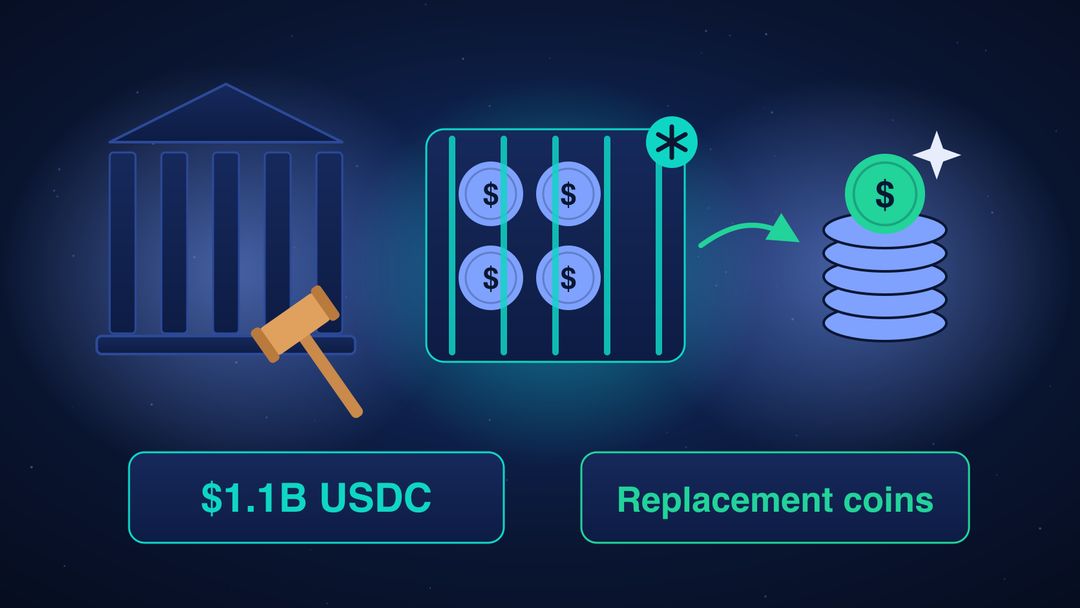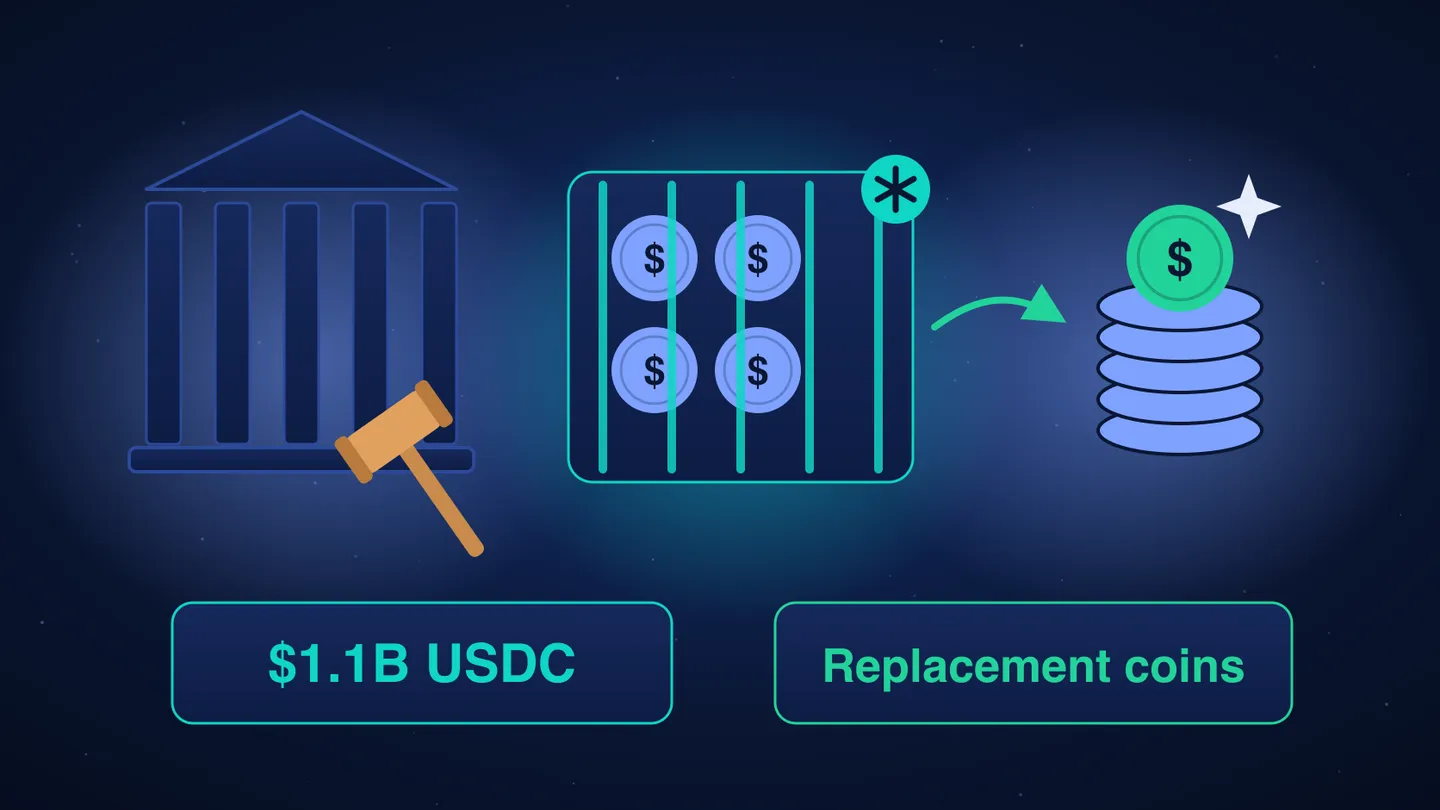
The US Justice Department said on Monday, November 23, that it has filed a civil claim in court to permanently take more than $1.1 billion in USDC, the dollar stablecoin issued by Circle. The coins are part of the money stolen from Binance in the record hack of October 29, which US officials blame on North Korean hackers.
Until now, the coins had only been frozen under a temporary court order obtained on November 12. The new filing asks a judge to make the seizure permanent.
Key facts
- The filing: a civil forfeiture complaint, a case brought against the money itself rather than against a person. It was filed in federal court in Washington, DC.
- The amount: more than $1.1 billion in USDC, according to the Justice Department. The balances listed in the complaint add up to about $1.17 billion, spread across 36 wallet addresses on 18 blockchains.
- Keeping it frozen: in a separate request, prosecutors asked a judge to extend the order that keeps the coins blocked, so it does not run out while the case goes on.
- Who is blamed: the Justice Department says North Korean cyber actors stole more than $6 billion from Binance. The FBI, the Secret Service and the IRS investigated, and Circle helped.
- Total recovered so far: since the theft, the US says it has helped freeze, seize or return more than $2.9 billion in crypto from several sources.
Why Circle would print new coins
Circle blocked the stolen USDC soon after the hack, so nobody can move it. But according to the complaint, Circle told prosecutors it cannot move the original coins out of the hackers’ addresses.
Instead, Circle agreed to issue the same amount of new USDC and send it to the US government, but only after a court grants a final forfeiture order. The blocked coins would stay where they are, permanently frozen.
The rest of the stolen money
A large part of the haul is still out of reach. Blockchain analysis firm Elliptic said on Monday that at least $247 million of the stolen funds have been pushed through bitcoin “coinjoin” transactions, which mix money from many users to hide where it came from. Elliptic said most of the remaining crypto has not yet been turned into cash, which means exchanges may still be able to stop it.
Binance has said it covered all customer losses with its own money. Separately, it won a $6.5 billion worldwide freezing order from a court in Abu Dhabi on November 18 against the unidentified attackers. That court is due to look on December 1 at whether companies holding frozen stolen coins must hand them over.
What happens next
A judge must now decide whether the USDC should be forfeited. The complaint does not say who would finally receive the money. The Justice Department presents the case as part of helping Binance recover its losses, while Binance is chasing some of the same funds through its own court case in Abu Dhabi.
Why it matters
The case shows how freezing works with stablecoins. Because a company like Circle can block coins quickly, more than $1 billion of the stolen money never got far. But the case also shows the limits: the coins can only be recovered through the courts, and the hackers still control billions in other crypto that no company can freeze.
This article is for information only and is not financial advice.