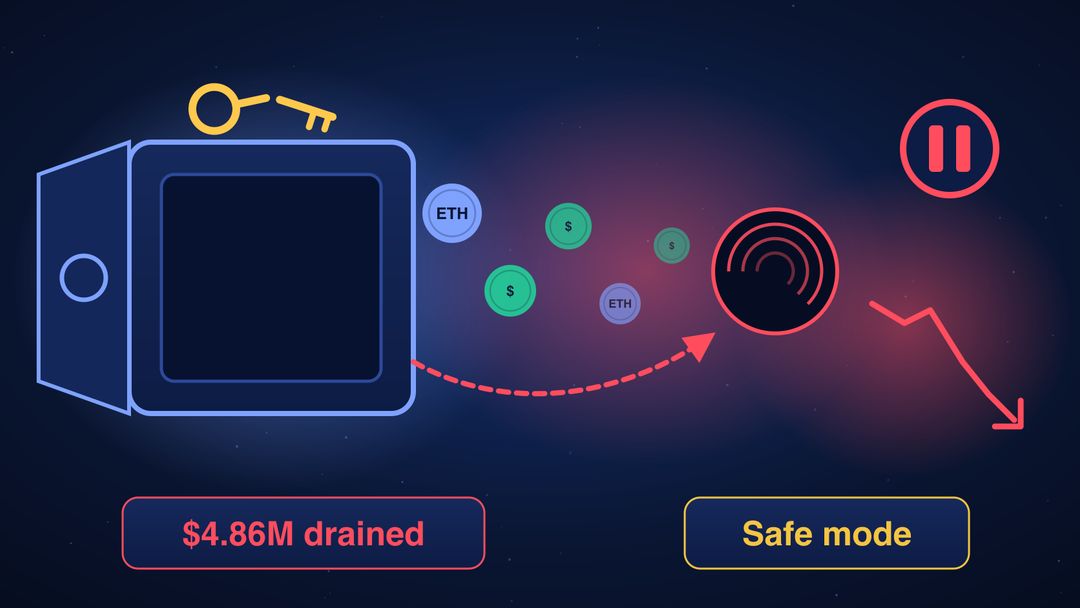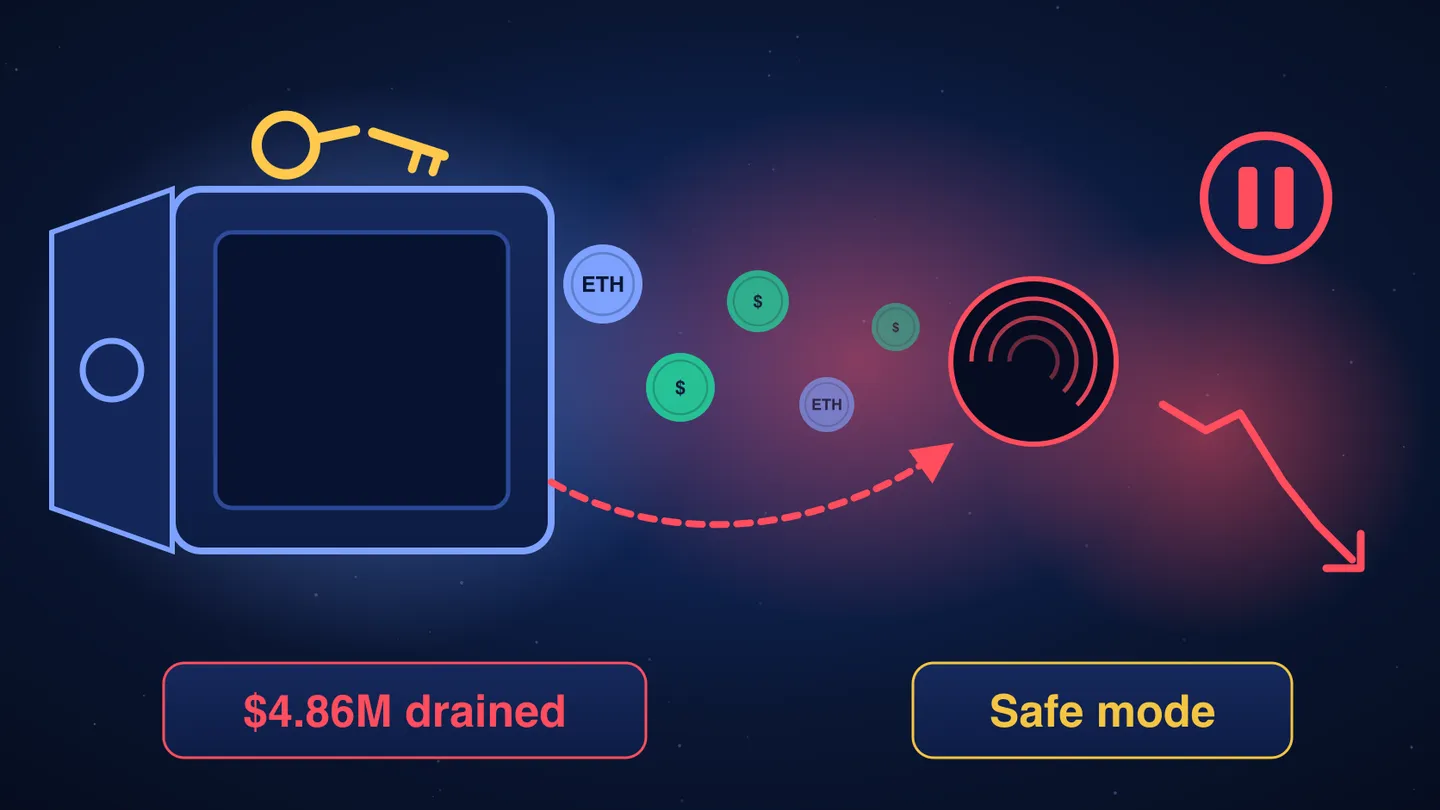
Chainflip, a service that lets people swap coins directly between different blockchains (for example bitcoin for ether) without a central exchange, put its whole network into “full safe mode” on Saturday, November 21, 2026. A few hours earlier, an attacker had taken about $4.86 million from the protocol’s Ethereum vault, the pool of funds it uses to pay out swaps on Ethereum. Chainflip has called it a “potential exploit” and says it is investigating.
Key facts
- What was taken: One transaction emptied every liquid coin in the Ethereum vault: about 520 ETH, 3.25 million USDC and 758,000 USDT, worth roughly $4.86 million in total.
- When: at about 2:10 a.m. ET (07:10 GMT) on November 21. Chainflip announced safe mode about two hours later.
- How fast the money moved: The attacker used a brand-new wallet. The stablecoins were swapped into ether within minutes, and almost everything was sent to the Tornado Cash mixer within about nine minutes. That was too fast for the stablecoin issuers to freeze the USDC and USDT.
- What is paused: swaps, deposits, withdrawals and price quotes. Deposits that were not yet finished will be processed once safe mode ends. Liquidity providers, the users who put money in the vaults to earn fees, cannot withdraw until then.
- Other vaults: Security researchers say the Bitcoin and Solana vaults appear unaffected.
- Token price: Chainflip’s FLIP token fell about 34%, and its market value dropped from about $41.6 million to about $27 million.
How it may have happened
Security firms say this does not look like a bug in the vault’s code. The withdrawal carried a valid approval signature from the key that Chainflip’s validators share to authorize payouts. That key is split among 150 validators, needs at least 100 of them to sign, and is replaced every three days. One analysis found the theft was the only one of nearly 300,000 approvals since 2023 that broke the normal numbering, which suggests it was created outside Chainflip’s usual system. Chainflip has not confirmed a cause or how the key could have been misused.
Not the first incident
In September 2026, an attacker took about $736,000 in stablecoins from Chainflip’s Tron vault through a flaw in how it handled Tron withdrawals. Validators later voted to repay the affected liquidity providers from surplus funds. Chainflip has not said whether it will repay anyone this time.
Why it matters
Cross-chain services hold pools of coins on many blockchains at once, which makes the keys that control those pools a prime target. Here, the attacker did not need to break the code; a valid signature was enough. For users, the immediate effect is that money parked in Chainflip’s pools, and swaps that were still in progress, are stuck until the protocol reopens. The case is a reminder that “decentralized” control of a shared key is only as safe as the system that produces its signatures, and that stolen funds can now vanish into a mixer within minutes.
This article is for information only and is not financial advice.