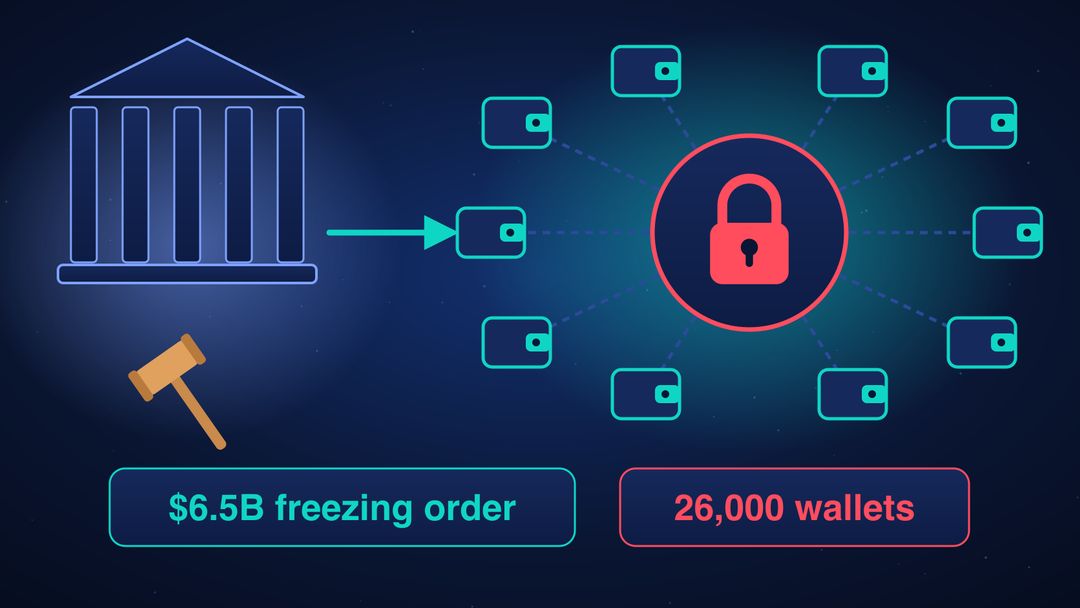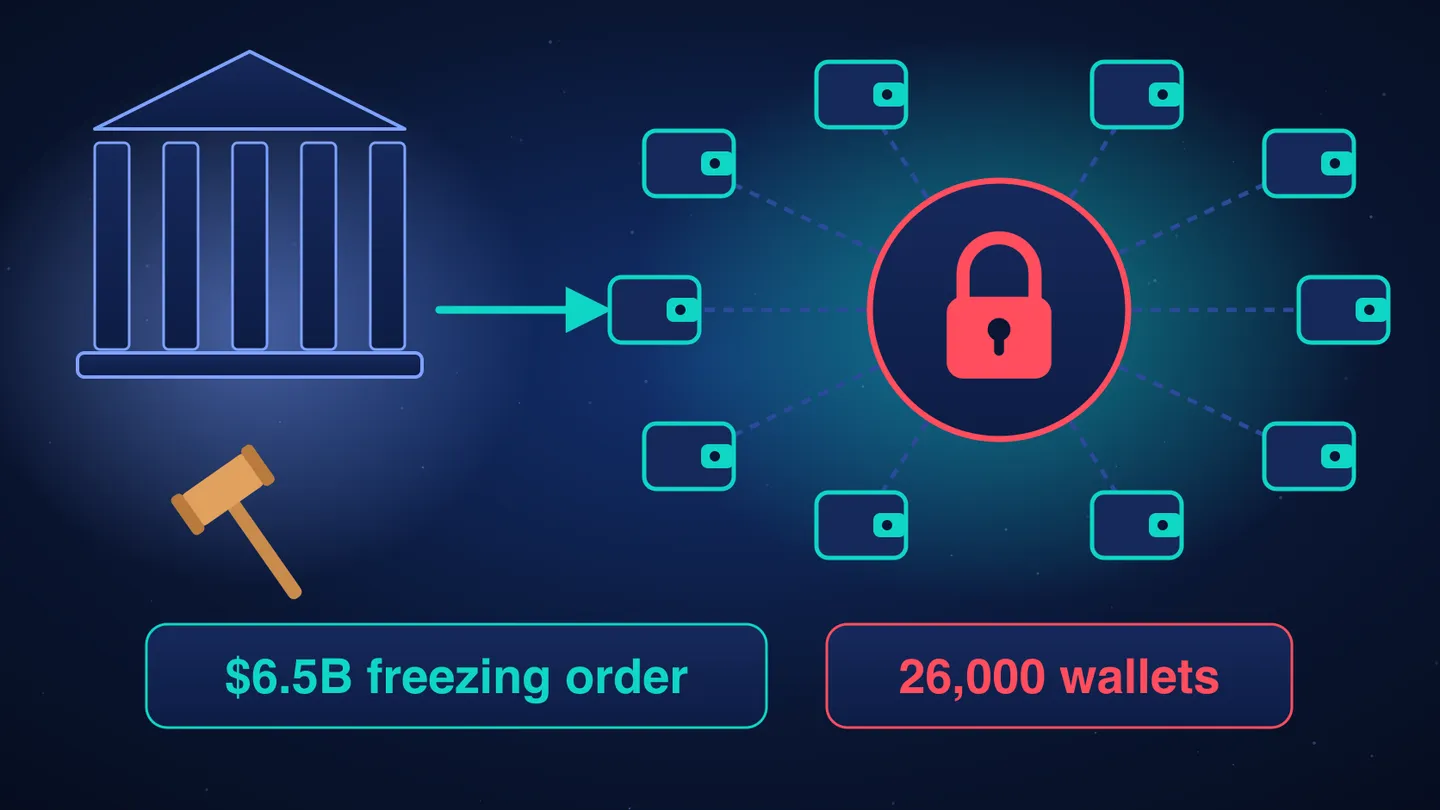
Binance said on Wednesday, November 18, that it has won a $6.5 billion worldwide freezing order from the Abu Dhabi Global Market Courts, the courts of the emirate’s international financial center. The order targets the still-unidentified people accused of carrying out the October 29 attack on the exchange, the largest hack the crypto industry has seen.
Key facts
- The order: a worldwide freezing injunction covering up to $6.5 billion, issued by Justice William Stone SBS KC, according to Binance.
- Who it targets: the people accused of carrying out the attack, who have not been identified.
- Other orders: the court also granted orders over specific stolen assets and orders requiring those assets to be handed over.
- Wallets: Binance’s lawyers have identified about 26,000 wallet addresses holding stolen assets. The list will be updated as the money moves.
- Legal notices on the blockchain: the orders can be delivered directly to the wallet addresses instead of through traditional channels.
What the $6.5 billion means
The number is the amount the order covers. It is not the amount Binance has recovered, and the company did not say how much has been returned so far.
Some of the interim orders name parties that have already frozen stolen coins. Binance says it does not accuse them of any wrongdoing. It explains that some token issuers, exchanges and other partners need a formal court order before they can release or return frozen funds, and these orders are meant to give them that legal basis.
M. Kendall Day of the law firm Gibson Dunn, which represents Binance, called the injunction “one of, if not the, largest publicly known freezing orders ever made.” That description comes from Binance’s own legal team.
The numbers so far
- Affected in the hack: about $6.34 billion, by Binance’s count. The exchange says it has covered that amount from its treasury, its user protection fund and its insurance funds.
- Frozen or intercepted: about $2.85 billion, according to an earlier Binance report.
- US action: the Justice Department said on November 12 that more than $2.7 billion had been frozen by government and private efforts, including more than $1.2 billion it has court approval to seize or restrain. These are separate tallies from different dates and should not be added together.
Why it matters
Freezing stolen crypto is only the first step. Getting it back usually requires a legal process, and this order gives companies holding blocked coins a clear court document to act on. It also shows how courts are adapting to crypto, by treating a wallet address as a place where legal papers can be served.
The limits are real, though. The attackers swapped stolen stablecoins into assets such as Bitcoin and Ether, which have no central issuer able to block them, and a court order is hard to enforce against people nobody has identified. The FBI has blamed the theft on North Korean military hackers. How much of the money comes back will depend on whether the coins reach a company that can act on the order.
This article is for information only and is not financial advice.