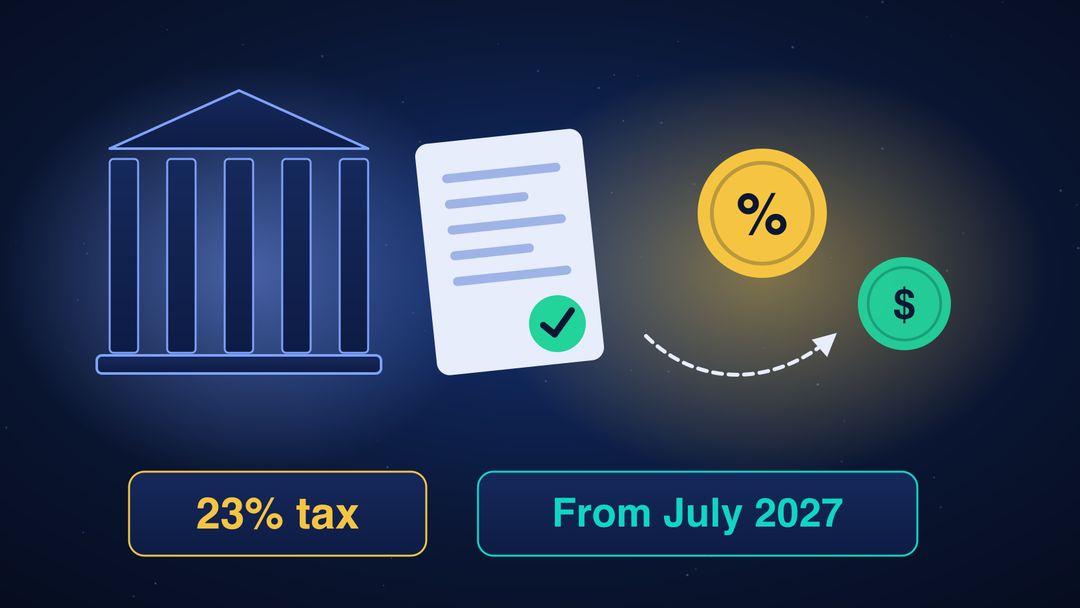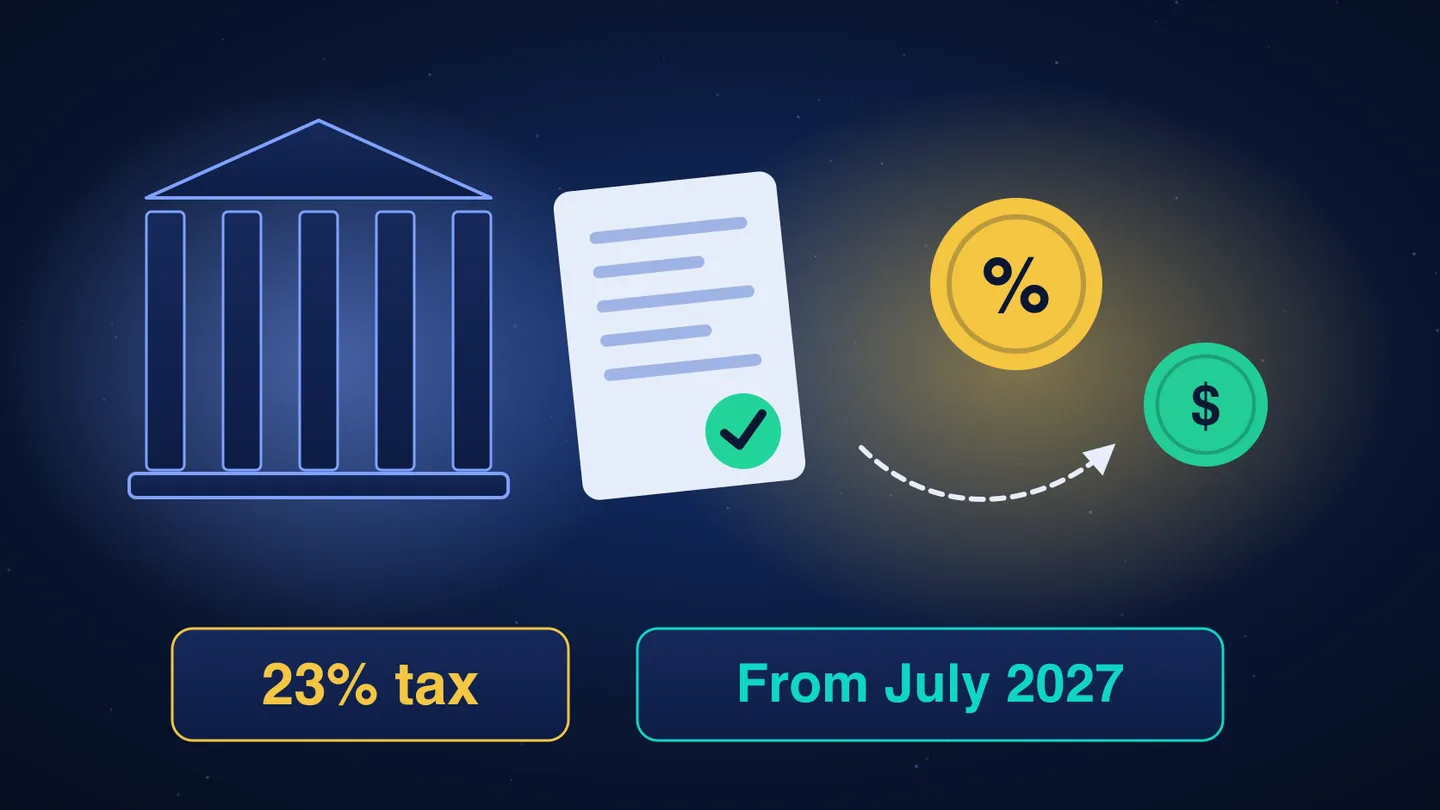
Ukraine is about to give its crypto market clear rules for the first time. This week the country’s parliament, the Verkhovna Rada, passed a law that makes buying, selling and holding crypto legal under a full set of rules, sets how profits are taxed and names the regulators in charge. 271 lawmakers voted in favor in the final reading. The main rules start on July 1, 2027.
Key facts
- The bill: number 10225-d. It passed its first reading in September 2025 and took about three years of work in total.
- Tax on profits: individuals will pay 18% income tax plus a 5% military levy, so 23% in total, on their net crypto profit for the year.
- Swaps are free: exchanging one crypto asset for another will not be taxed. Tax is due when crypto is turned into money.
- Losses count: losses from earlier years can be carried forward to reduce future crypto profits.
- Revenue: lawmaker Yaroslav Zhelezniak, of the parliament’s finance and tax committee, estimated the law will bring the state about 15 billion hryvnias (around $330 million).
- Not signed yet: President Volodymyr Zelensky still has to sign the law.
A cheaper option for older holdings
People who bought crypto before the law takes effect get a choice. If they cash out into ordinary money by the end of 2028, they can pay a lower rate: 5% income tax plus the 5% military levy. The catch is that this 10% is charged on the whole amount sold, not only on the profit. For someone with a large gain, that can cost less than 23% of the profit. For someone with a small gain, the normal rule is usually cheaper.
Who will watch the market
Supervision is split between two bodies:
- the National Securities and Stock Market Commission, which oversees the crypto market and the companies working in it;
- the National Bank of Ukraine, the central bank, which takes charge of stablecoins and electronic-money tokens. It can set its own rules for them and can allow or ban their use in the country.
Exchanges and other crypto companies will need permission to operate under the new rules.
How Ukraine got here
Ukraine has a large crypto community, but the legal picture stayed unclear for years. President Zelensky signed a first law on virtual assets in March 2022, weeks after Russia’s full-scale invasion, but it never took effect because the matching tax rules were missing.
The new law fills that gap. It also brings Ukraine’s rules closer to the European Union’s, which is part of the country’s effort to join the EU.
Zhelezniak celebrated the vote by writing that parliament had finally done something that had not been possible for 35 years.
Why it matters
Many Ukrainians already use crypto, without clear tax rules. From July 2027 they will know what they owe: nothing when they swap coins, 23% of the yearly profit when they cash out, or the lower 10% option for older holdings sold by the end of 2028. For crypto firms, the law opens a regulated path into a large market, and the central bank’s power over stablecoins will decide which dollar-linked coins can be used there. The law is not final until the president signs it.
This article is for information only and is not financial advice.