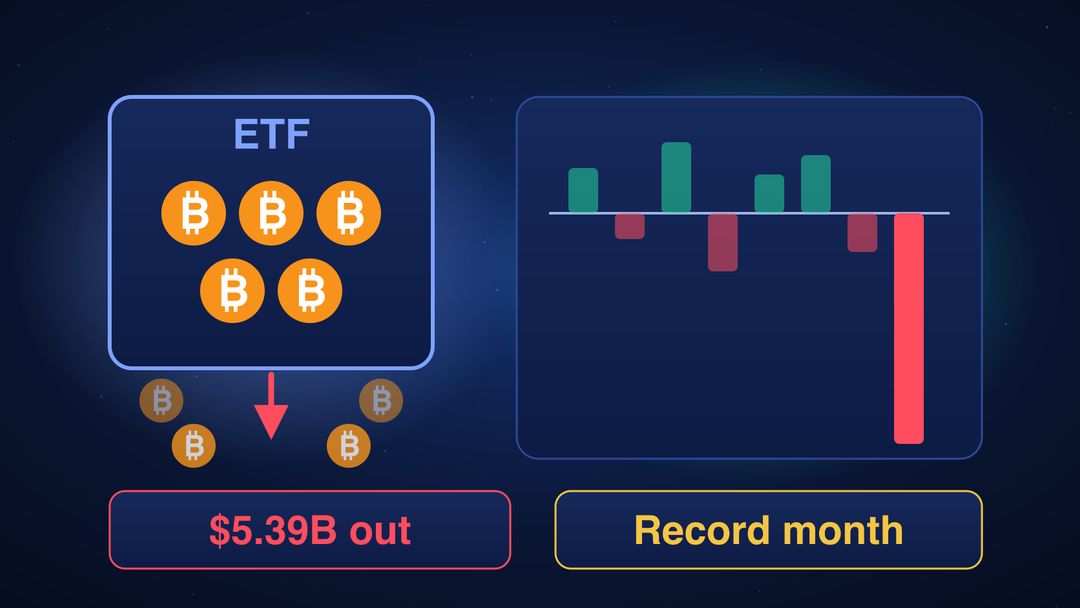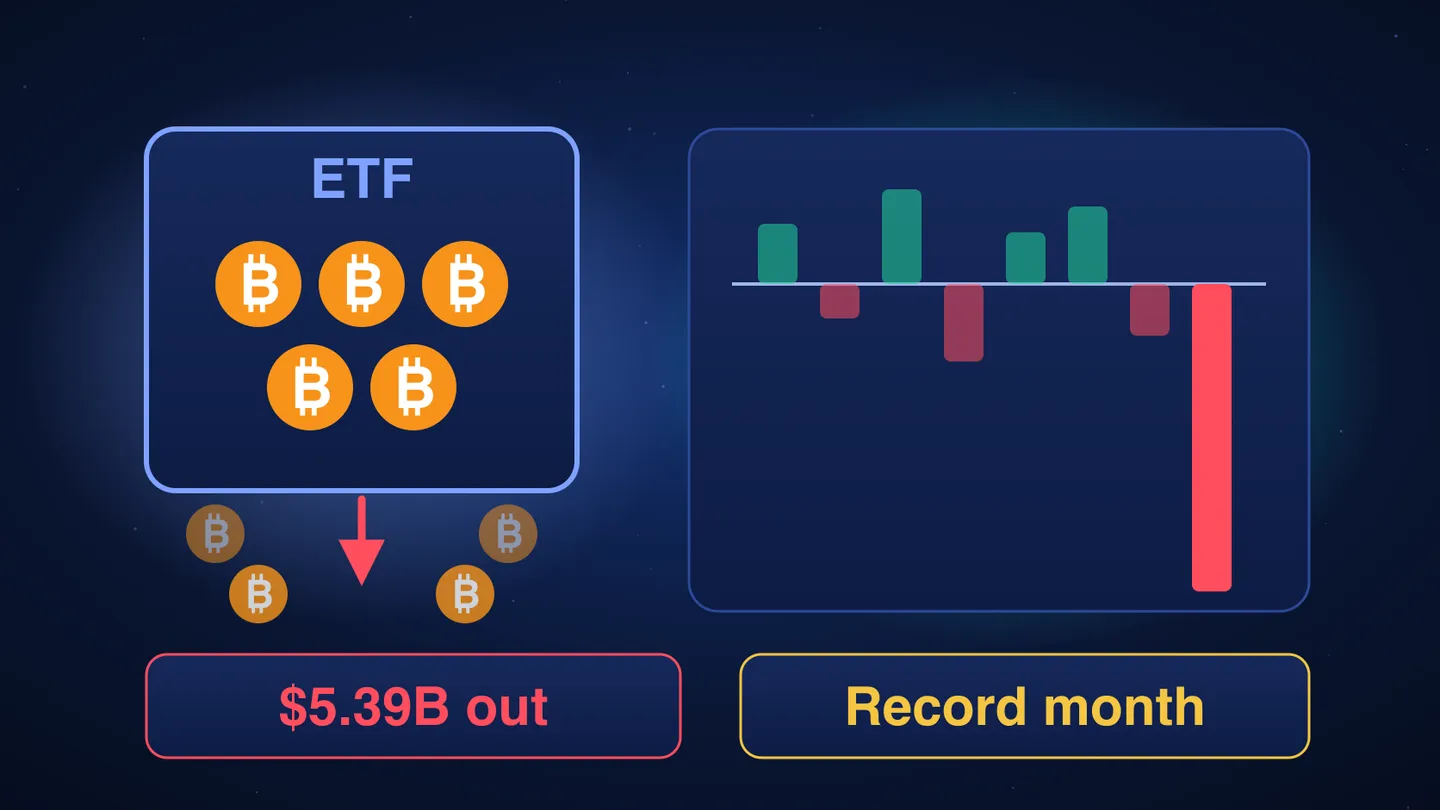
Investors are pulling money out of US spot bitcoin exchange-traded funds (ETFs) faster than ever. Through November 25, the funds recorded $5.39 billion in net outflows for the month, according to the data site SoSoValue. That is already the largest monthly outflow since the funds started trading in January 2024, and November still has a few trading days left.
Key facts
- New record: $5.39 billion out in November so far, about 20% more than the previous record of $4.51 billion set in June 2026.
- Losing streak: on Wednesday, November 25, the funds lost another $453.1 million, the seventh trading day in a row of outflows.
- Biggest fund, biggest outflow: BlackRock’s iShares Bitcoin Trust (IBIT) accounted for about $329.7 million of Wednesday’s outflows. Grayscale and Bitwise funds followed.
- Whole year now negative: counting all of 2026, the funds have seen about $5.02 billion more money leave than come in.
- Ether funds too: US spot ether ETFs lost about $1.30 billion in November, after about $1.6 billion in October.
What is behind it
Bitcoin has fallen about 22% in November, to around $60,000. On Wednesday it briefly dropped to about $57,300 before bouncing back above $60,000 on Thursday.
Analysts point to several pressures at once: high inflation, expectations that the US Federal Reserve will raise interest rates again in December, new US tariffs and a sharp sell-off in AI-related stocks. When investors cut risk across their portfolios, bitcoin funds are among the first things they sell. Some research firms have also turned more cautious: Galaxy has withdrawn its earlier call that bitcoin’s bear market ended in June.
How ETF flows work
A spot bitcoin ETF holds real bitcoin. When investors sell more shares than they buy, the fund can shrink, often by selling or redeeming some of its bitcoin. Large outflows therefore mean less steady buying, and sometimes more selling, in the market. Since their launch, these funds had been one of the main sources of new demand for bitcoin.
Why it matters
ETF flows are one of the clearest daily signs of what big and small investors in traditional markets think about bitcoin. A record month of withdrawals shows that many of them are reducing risk rather than buying the dip. Analysts say a lasting recovery in bitcoin would likely need these flows to turn positive again, which may depend on calmer inflation news or clearer signals from the Fed. The final November figure will be known after the last trading day of the month.
This article is for information only and is not financial advice.