Spain is giving its financial intelligence unit, Sepblac, the power to freeze crypto accounts on its own, without first asking a judge. The change was published this week in Spain’s official state gazette, tucked inside a larger government decree that is mainly about consumer credit. It is set to take effect on January 25, 2027, but Spain’s parliament still has to approve it.
Key facts
- Who: Sepblac, the unit that collects and analyses reports of suspicious money movements in Spain.
- What it can freeze: crypto accounts, bank accounts and payment accounts, when it sees signs that the money could be linked to money laundering or terrorist financing.
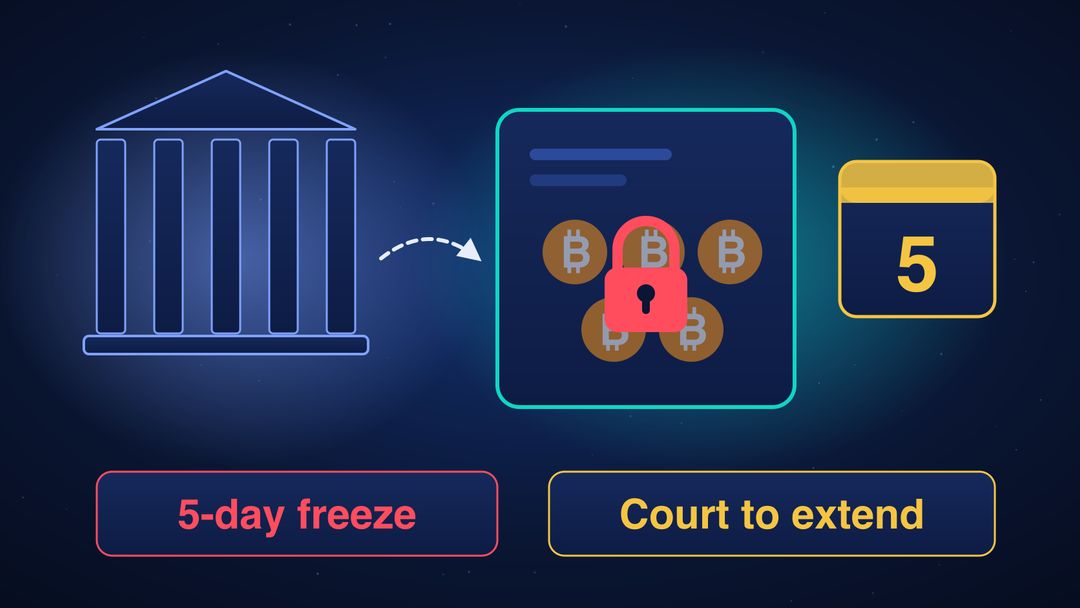
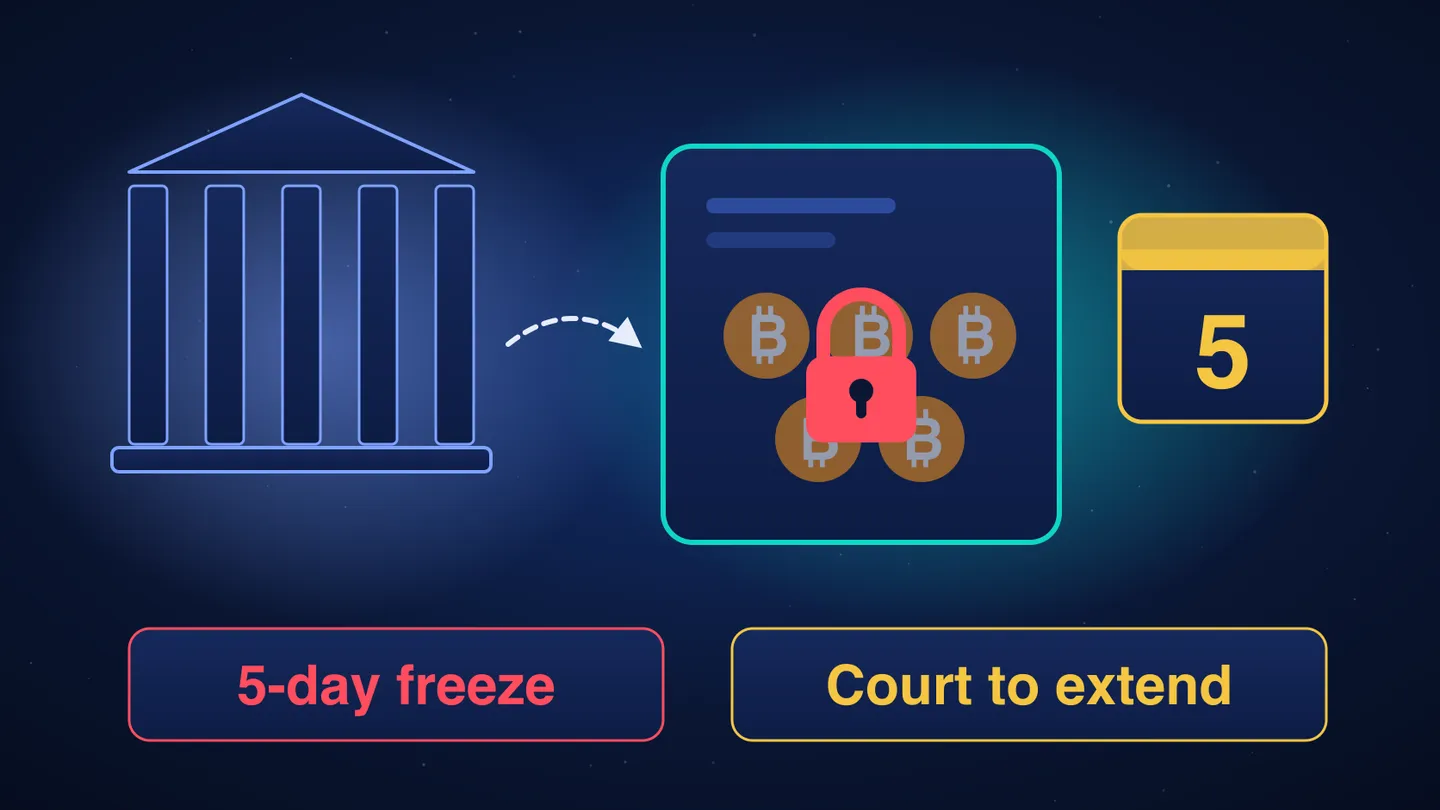
- Accounts: a freeze can last up to five working days.
- Transfers: a transaction that is already under way can be held for up to 10 working days.
- Role of the courts: after those limits, the freeze ends automatically unless a judge approves or extends it at the request of the public prosecutor.
- Reports from firms: when the suspicion comes from a report filed by a bank or crypto company, Sepblac must order the freeze within three working days.
- Firms must comply: a company that ignores a freeze order commits an offence under Spain’s anti-money-laundering law.
What changes
Until now, Sepblac could suspend a transaction only when a financial intelligence unit from another country asked it to. Under the new rules it can act on its own analysis, or at the request of Spanish police. The law also names crypto accounts explicitly, next to bank and payment accounts.
The government says the reason is speed: money, especially online and in crypto, can be moved abroad before investigators finish looking at a case. A short freeze is meant to keep the funds in place while Sepblac checks its suspicion and, if it is confirmed, passes the case to the authorities.
Timing and approval
- Start date: the measure applies two months after publication, on January 25, 2027. Crypto firms working in Spain have until then to prepare for direct freeze orders.
- Parliament: because it was issued as a decree-law, Spain’s Congress of Deputies must ratify it within 30 days. If it is rejected, the crypto measure falls with the rest of the decree.
- International standards: the government says the change brings Spain in line with the rules of the Financial Action Task Force (FATF), the global anti-money-laundering body, and with part of the EU’s latest anti-money-laundering rules. Spain is currently going through an FATF evaluation.
Why it matters
For people who hold crypto with an exchange or other provider in Spain, this means an account can be frozen for several days without a court order if the authorities suspect the money is linked to crime. The government says it closes a gap that let suspicious funds slip away quickly. The trade-off is that a freeze can now happen before any judge looks at the case, which is why the time limits are short and a court must approve anything longer. Other European countries are also widening their powers over crypto, so similar rules may spread.
This article is for information only and is not financial advice.