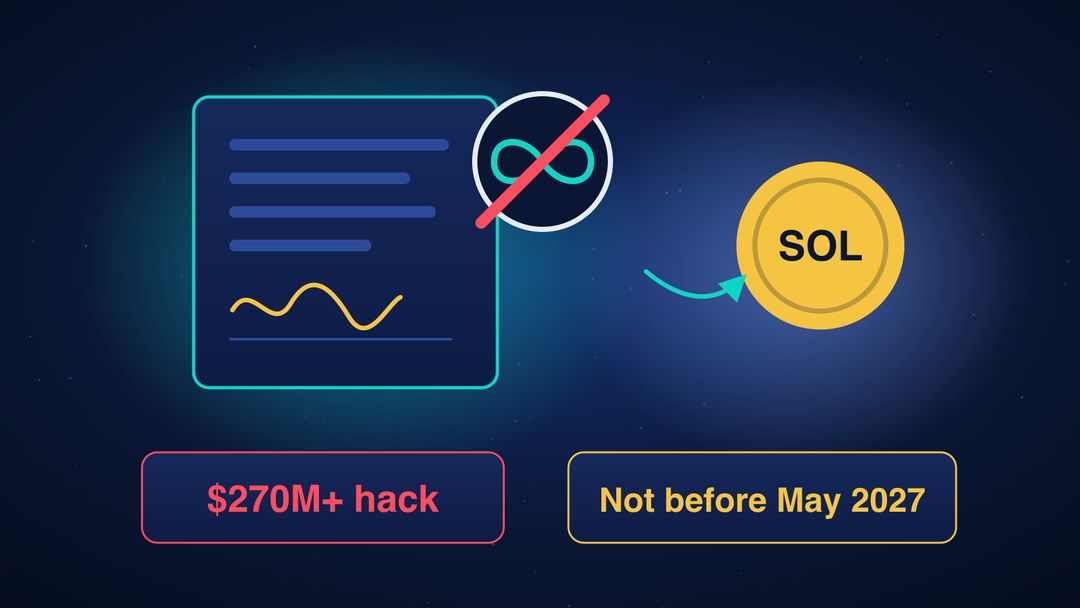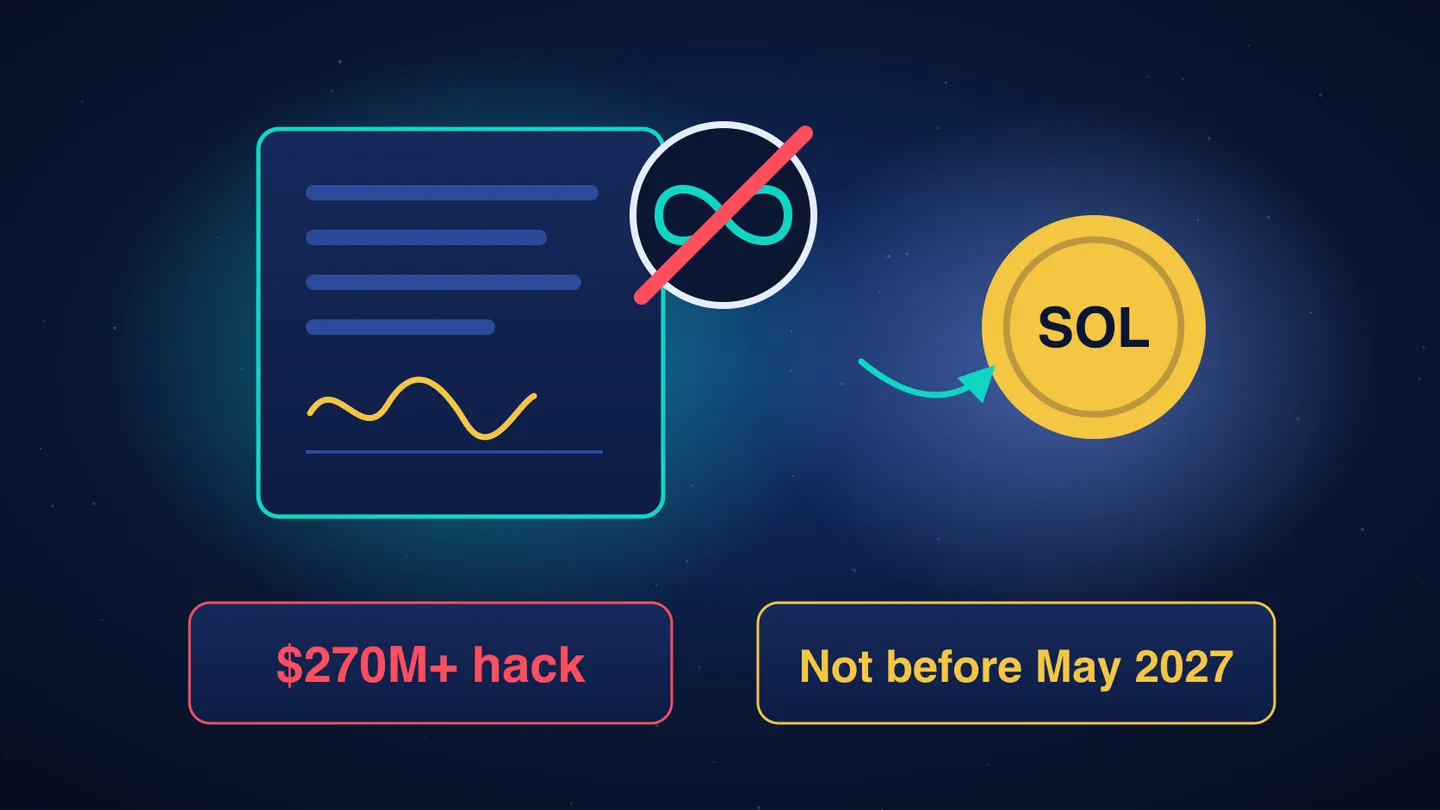
Solana’s core developers want to switch off a feature that has caused bugs for years and that attackers used to drain the trading platform Drift earlier this year. A draft proposal named SIMD-0723, filed on November 5, 2026 by an engineer at Anza (the company behind Solana’s main validator software), would remove “durable nonces”, transactions that can be signed now and sent much later. The proposal says the change would not be switched on before May 5, 2027.
Key facts
- What is proposed: remove durable nonces from the Solana network. After the change, every transaction must use a recent “blockhash”, which acts like a short expiry date.
- Who proposed it: Gabe R. of Anza, in the official Solana Improvement Documents repository.
- Status: still a draft. It must be reviewed and accepted by Solana’s validator teams before anything changes.
- Earliest date: not before May 5, 2027. The proposal promises affected users at least six months to adapt, counted from November 5, 2026.
- Who is affected: custodians and exchanges that approve transfers on offline (“air-gapped”) computers, where signing takes longer than the normal expiry window.
- What replaces it: small onchain programs that check an offline signature and then carry out the approved transfer. The proposal names two such tools that are being built for this.
What a durable nonce is
On Solana, a normal transaction includes a recent blockhash and expires once that blockhash is more than 150 blocks old, which is about a minute or less. That short life protects users: an old signed transaction cannot be used later.
A durable nonce removes that limit. A transaction signed with one stays valid until it is used, even weeks later. The feature was added in 2019 so that big holders could sign on offline machines without racing a clock.
The link to the Drift hack
On April 1, 2026, attackers took more than $270 million from Drift, a trading platform on Solana. They did not break Drift’s code. Instead, they got some of the people who control Drift’s admin keys to approve transactions days in advance, using durable nonces, and then fired them all at once. Drift and blockchain analysts linked the attack to North Korean hackers.
The proposal itself does not mention Drift. It gives other reasons: special rules for durable nonces have caused repeated security bugs, including a 2022 incident that halted Solana’s main network for about 4.5 hours, and they make the network easier to spam.
What changes for users
For most people, nothing: wallets already use the normal expiry. The work falls on custodians, exchanges and apps that sign transactions in advance. They will need to move their accounts to one of the new signing programs before the switch-off. The proposal warns that these programs carry their own risk: a transfer that fails may leave the approval still usable, so a failed attempt does not cancel it.
Existing nonce accounts are not touched, and owners can still withdraw the money in them.
Why it matters
Solana is one of the largest blockchains, and big custodians and exchanges hold billions of dollars on it. Removing a feature that let a signed approval sit unused for weeks closes the door used in one of 2026’s biggest hacks, but it also forces the firms that rely on offline signing to rebuild part of their systems. The plan is not final yet, and the date could still move later.
This article is for information only and is not financial advice.