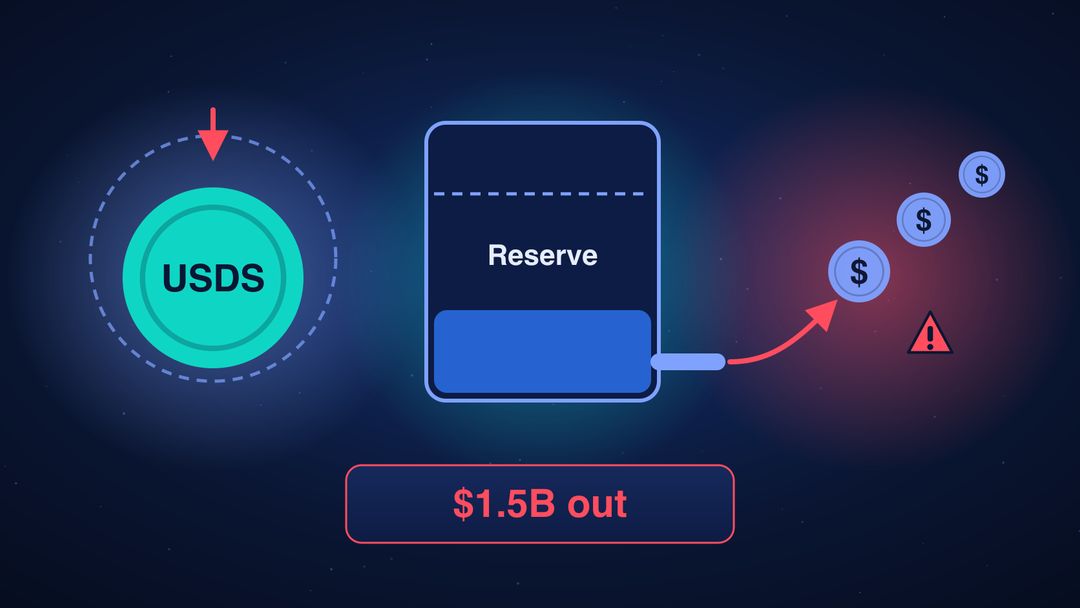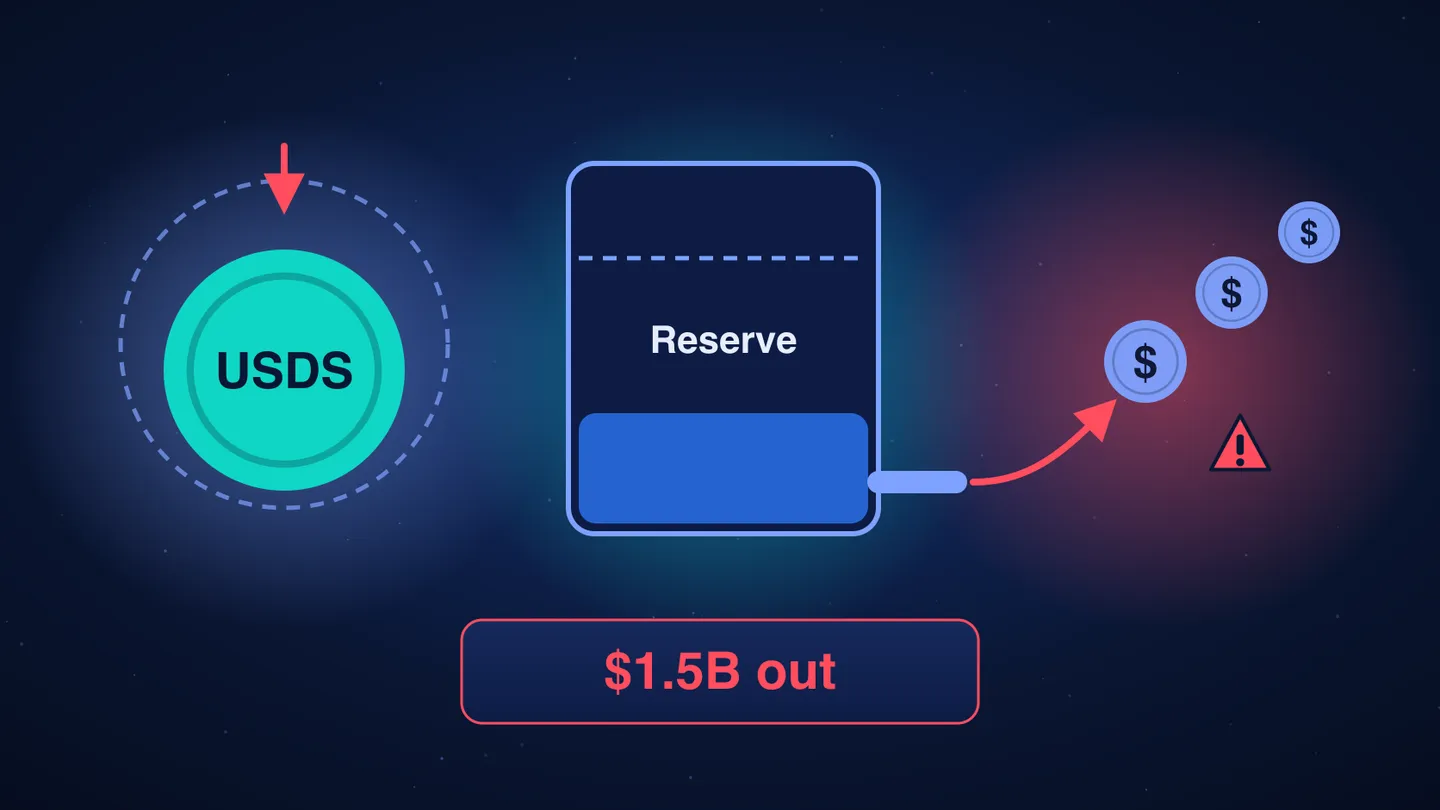
USDS, the dollar stablecoin of the Sky protocol (the project formerly known as MakerDAO), shrank by about a third on Thursday, November 19, after more than $1.5 billion was pulled out of the reserve that lets holders swap it for Circle’s USDC. The withdrawals followed a report that wallets tied to hackers, including North Korean groups, had used that same reserve for years. USDS kept its $1 peg throughout.
Key facts
- The report: crypto risk firm Inca Digital traced about $518 million in swaps through Sky’s reserve, called the Peg Stability Module (PSM), coming from 422 wallets linked to hackers, phishing gangs, sanctioned groups and addresses blocked by stablecoin issuers. It was first reported by CoinDesk at about 6:30 a.m. ET (11:30 GMT) on Thursday.
- North Korea: about $102 million of that was linked to North Korean actors, including $91.5 million sent through the reserve within 10 days of the $1.5 billion Bybit hack in February 2025. A second investigation firm, Nominis, separately confirmed the North Korean link.
- The outflow: in the hours after the report, more than $1.5 billion in USDC left the reserve, most of it swapped out by one large holder. About $1.07 billion in USDC was left in the reserve late on Thursday, and the supply of USDS stood at about $3.2 billion, according to public blockchain data.
- The peg: USDS stayed at $1.
How the reserve works
The PSM lets anyone swap USDC for Sky’s stablecoins, USDS and the older DAI, one for one, and back again. It has no identity checks of its own. According to the report, about 95% of the flagged swaps reached it through third-party trading tools such as 1inch, ParaSwap and MetaMask Swaps, rather than through Sky’s own websites.
The reserve’s USDC sits in a single wallet. Circle, which issues USDC, can block any wallet on its token, for example after a court order. Because the reserve is one pooled balance, a block would freeze all of it, including the money of ordinary users, not only the coins linked to criminals. Circle has not done this, and experts quoted in the reporting called it unlikely, but possible. That risk is the reason some large holders chose to swap out.
What Sky says
The Sky Frontier Foundation said it takes concerns about illicit activity seriously and that it had reviewed the flagged swaps. It said most of them, by value, date from 2021 to mid-2024, that they make up less than 0.06% of the more than $930 billion the reserve has handled over its lifetime, and that none went through Sky’s own websites, which screen wallets and block sanctioned countries.
Founder Rune Christensen said the protocol is “operating normally” and that holders can still use, save and redeem USDS as usual. He said USDS is backed by more than its value, with about $10 billion in collateral.
Why it matters
Sky’s stablecoins are among the largest in crypto and are used widely as building blocks in decentralized finance (DeFi). Thursday’s run did not break the peg, which shows the system handled a large wave of withdrawals. But it also shows a weak spot many DeFi stablecoins share: they rely on USDC, a token its issuer can freeze, while letting anyone use them with no checks.
Regulators and stablecoin issuers have been tightening rules on money laundering, and North Korean hackers have stolen billions from crypto firms in recent years. If more reports like this one appear, open protocols may face pressure to screen users, and holders may keep weighing the small but real chance that a reserve they depend on gets frozen.
This article is for information only and is not financial advice.