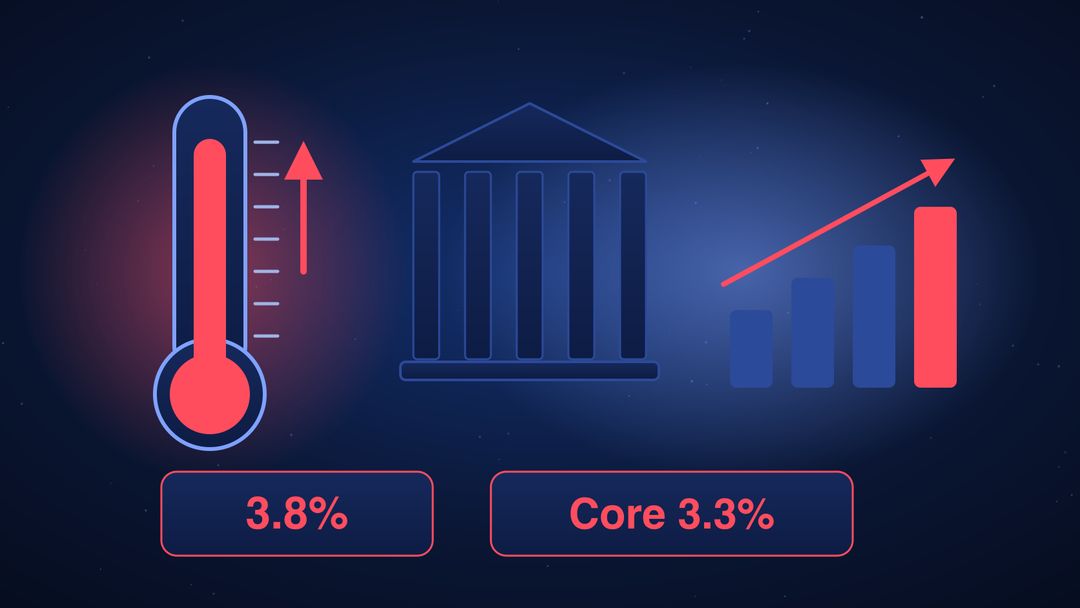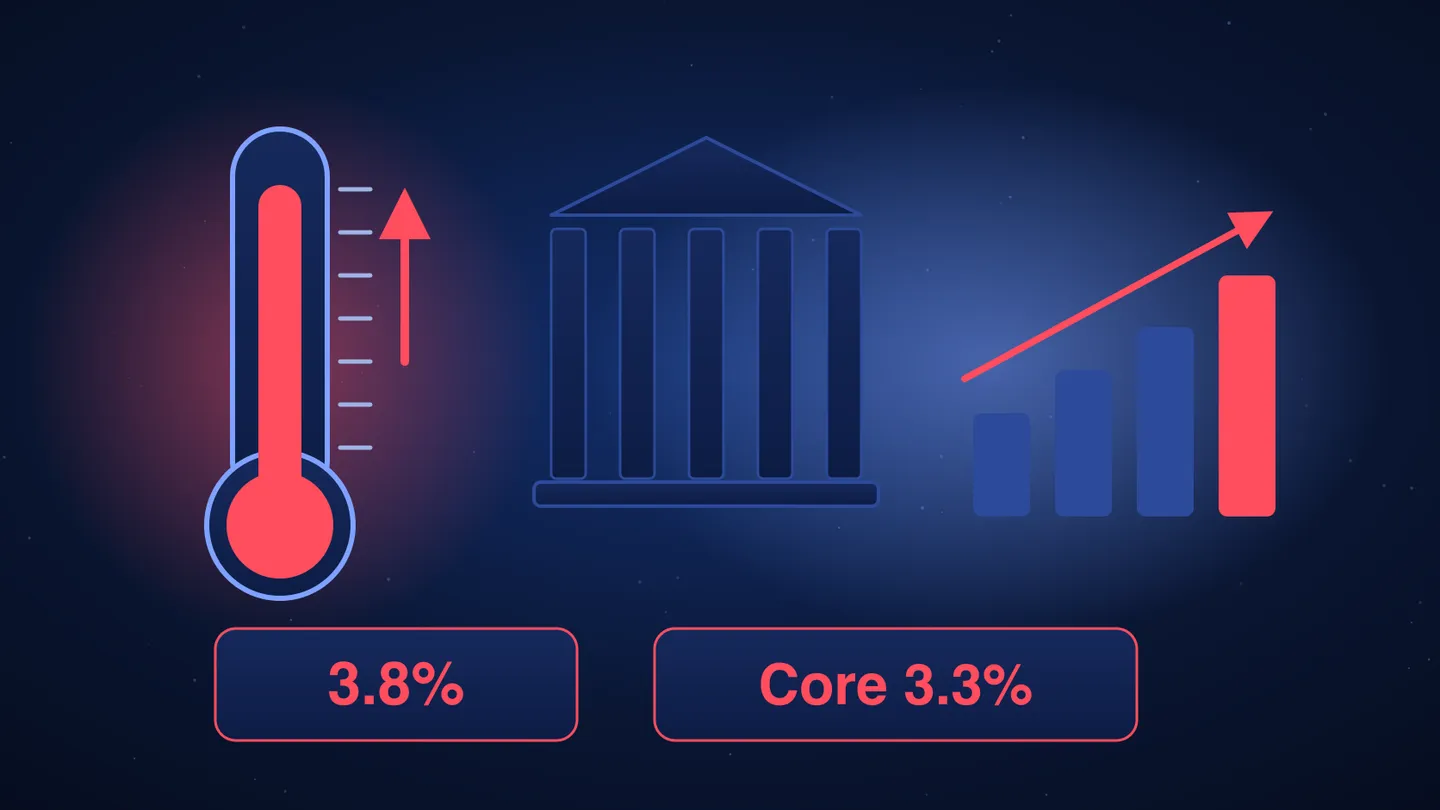
US inflation kept speeding up in October, according to the measure the Federal Reserve watches most closely. The PCE price index rose 3.8% from a year earlier, and the core index, which leaves out food and energy, rose 3.3%, a little more than economists expected. The figures came out on Wednesday, November 25, 2026, at 8:30 a.m. New York time (13:30 GMT), two weeks before the Fed’s last meeting of the year.
Key facts
- Headline inflation: prices rose 0.3% in October and 3.8% over 12 months, up from 3.7% in September (after revision). That matched forecasts.
- Core inflation: core prices also rose 0.3% in the month and 3.3% over 12 months, up from 3.1% in September and above the 3.2% most economists expected.
- Income and spending: personal income jumped 0.7%, well above the 0.4% expected, while consumer spending rose 0.3%. After adjusting for higher prices, spending was flat.
- Saving: the personal saving rate rose to 4.1%.
- Growth: in a separate report the same morning, the government revised economic growth for July to September up to an annual pace of 4.3%, from a first estimate of 3.4%.
What it means for the Fed
The Fed held its key rate at 3.75% to 4.00% in October, but the minutes of that meeting showed almost all officials expect more increases. Wednesday’s numbers did nothing to change that. Markets now treat a quarter-point hike at the December 8–9 meeting as close to certain. It would lift the range to 4.00% to 4.25%.
Futures traders still expect two more rate rises in total, but after the report they cut the odds of a third to about one in three, from roughly even on Tuesday. The core figure was higher than forecast, yet only slightly, and some analysts had warned that it would take a much bigger surprise to change expectations that were already this high.
Markets
US stock futures, already lower after a renewed sell-off in technology shares, slipped further after the release. Bitcoin traded below $59,000, down about a quarter this month, as rising rates make riskier assets less attractive. Investors have also been pulling money out of US spot bitcoin funds at a record pace in November.
Why it matters
Higher interest rates make borrowing more expensive and safe savings more rewarding, which tends to pull money away from stocks and crypto. With core inflation now more than 1.3 percentage points above the Fed’s 2% goal and the economy still growing fast, the Fed has little reason to stop raising rates soon. The next PCE report is due on December 23, after the December decision.
This article is for information only and is not financial advice.