A US bill that would turn the government’s bitcoin reserve into law, and forbid selling any of it for 20 years, has cleared a key step. On November 24 the House Financial Services Committee formally sent a revised version of the bill to the full House of Representatives, which means it can now be brought to a floor vote. Time, however, is very short.
Key facts
- The bill: H.R. 8957, the American Reserve Modernization Act of 2026, introduced on May 21 by Republican Representative Nick Begich of Alaska.
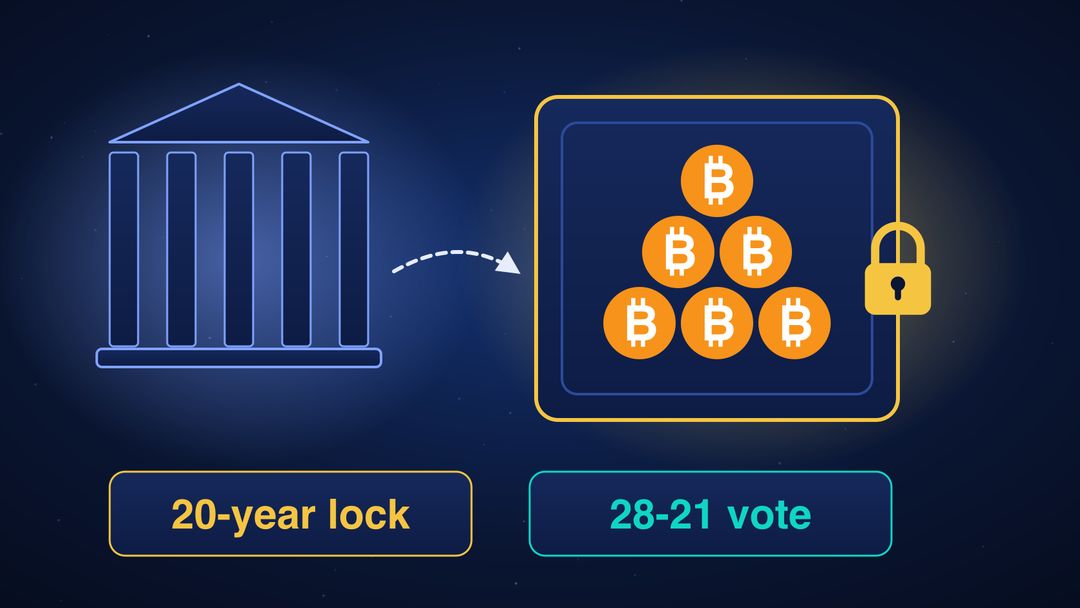
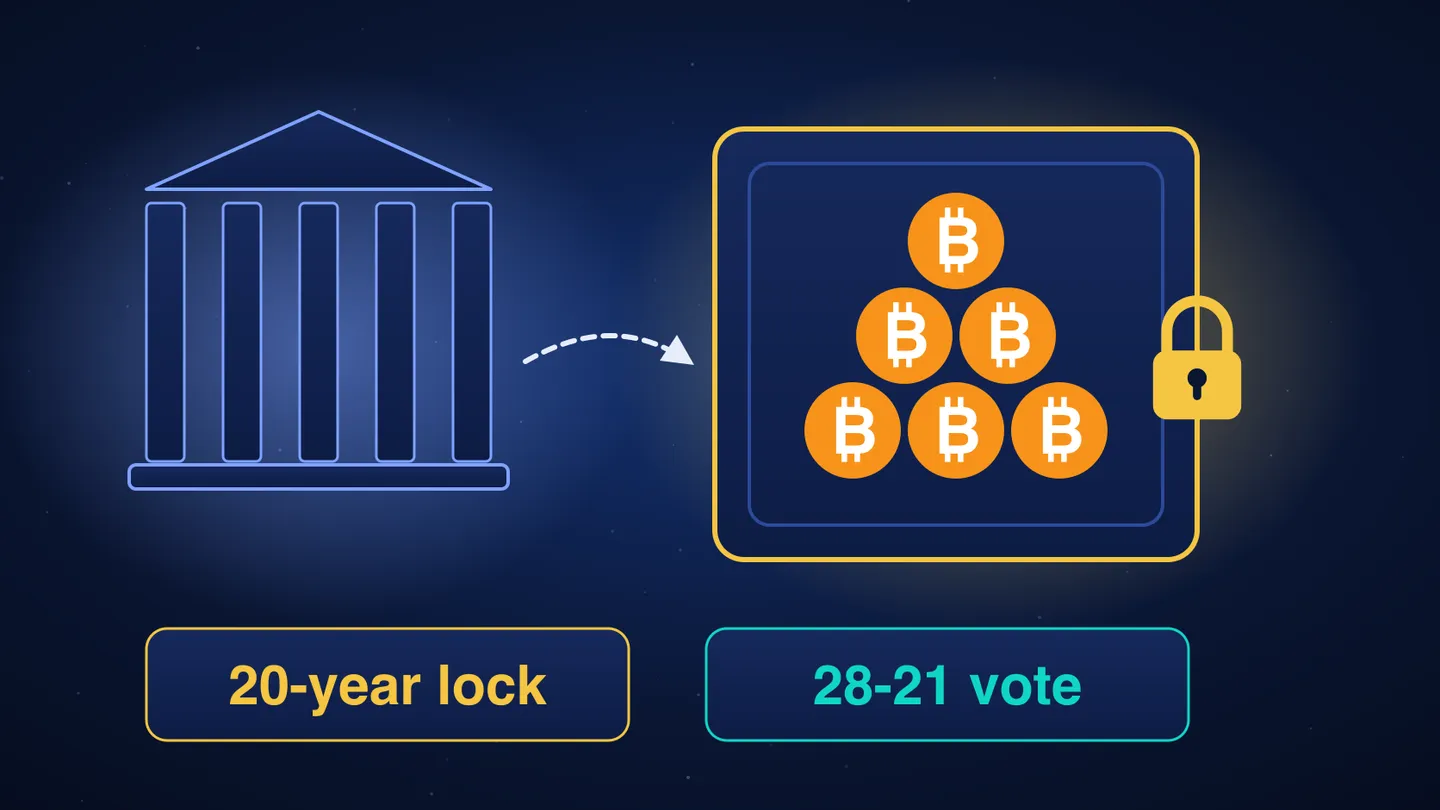
- Committee vote: the committee approved it 28-21 on September 16, strictly along party lines: every Republican voted yes and every Democrat voted no.
- Now on the calendar: the revised bill is listed for the full House and is eligible for a vote.
- What it would do: require the Treasury secretary to set up a Strategic Bitcoin Reserve, plus a separate stockpile for other cryptocurrencies, within 180 days of the law taking effect.
- The 20-year lock: bitcoin in the reserve could not be sold, swapped, auctioned, pledged or given away for any purpose for at least 20 years.
- Checks: the government would have to publish proof-of-reserve reports, and federal agencies would have to report the digital assets they already hold.
Building on an executive order
The reserve already exists on paper. President Donald Trump created it with an executive order in March 2025, filled mainly with bitcoin the government had already seized in criminal and civil cases.
The difference is permanence. An executive order can be changed or cancelled by a future president alone. A law passed by Congress would be much harder to undo, and the 20-year ban on selling would be written into it.
Why the path is narrow
- Little time: the current Congress ends on January 3. In just over five weeks, many of them holidays, the bill would need to pass the House, pass the Senate and be signed by the president.
- No Democratic support: the committee vote split exactly along party lines, and Democrats are set to control both the House and the Senate from January.
- Concerns about risk: some lawmakers have questioned holding an asset as volatile as bitcoin.
- Bettors are doubtful: on the prediction market Polymarket, traders give less than a 5% chance that the US sets up a national bitcoin reserve by the end of the year.
If the bill does not pass in time, it would have to be introduced again in the new Congress. The reserve created by the executive order would stay in place, but without the protection of a law.
Why it matters
The US government is one of the largest known holders of bitcoin. Whether that bitcoin is locked away for decades or can be sold by a future administration matters for the market, because a large sale could weigh on prices. A law would also be a strong signal that the US treats bitcoin as a long-term reserve asset. For now, the most likely outcome is that the reserve continues only under the executive order, which a future president could change.
This article is for information only and is not financial advice.