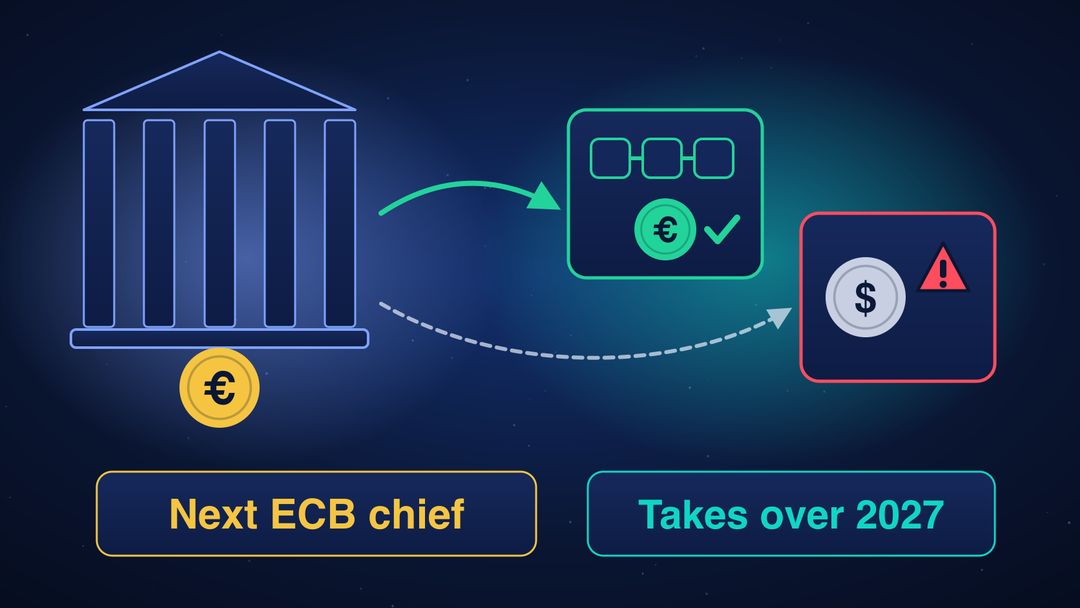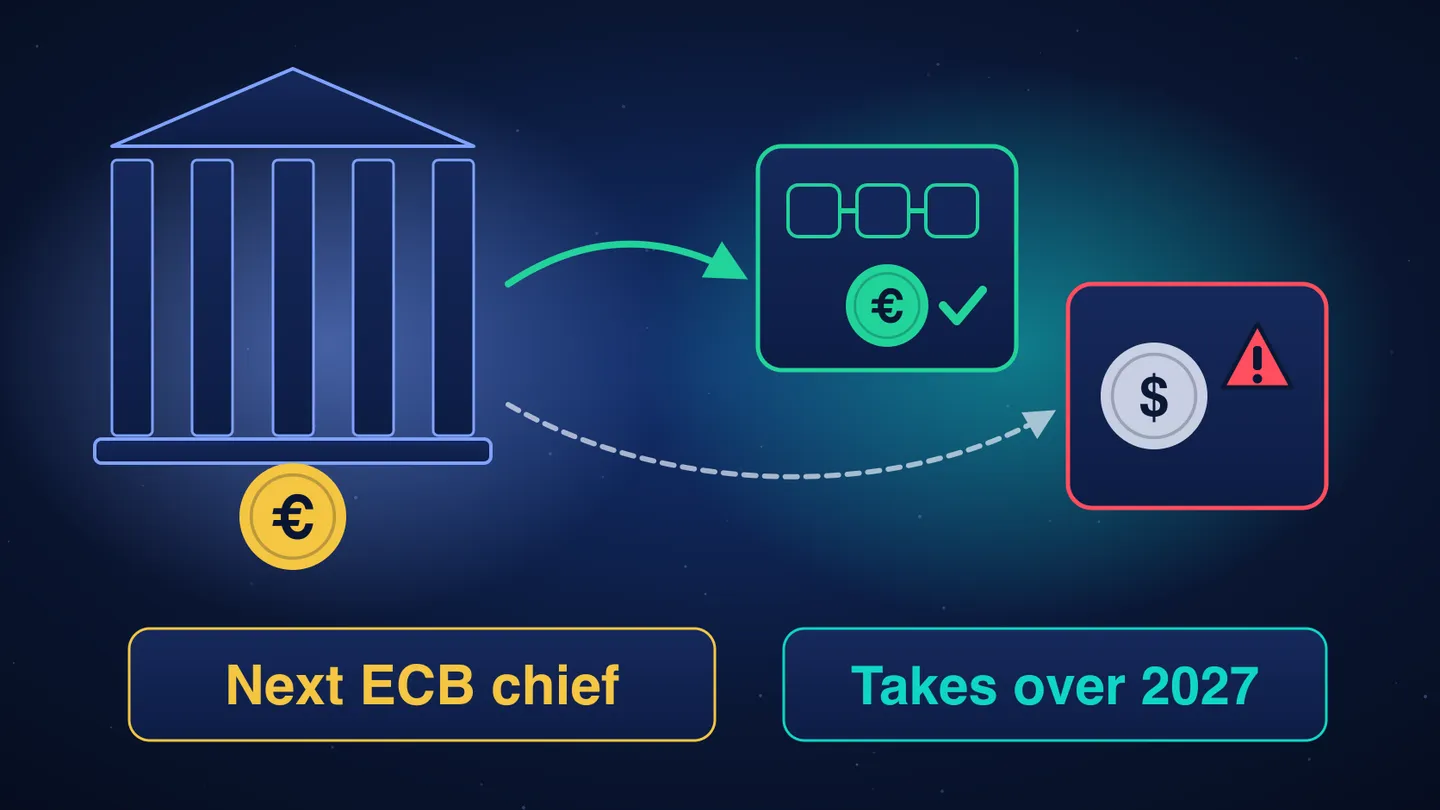
The European Central Bank, which sets interest rates for the 20-plus countries that use the euro, is getting a new leader. At a summit in Brussels on Thursday, November 26, 2026, a majority of eurozone leaders backed Pablo Hernández de Cos to replace Christine Lagarde, who leaves on February 7, 2027. For crypto, the choice matters because he is one of the best known central bankers to argue that stablecoins are not a credible form of money at scale.
Key facts
- Who: Pablo Hernández de Cos, 55, a Spanish economist. He has run the Bank for International Settlements (BIS), often called the central banks’ bank, since July 2025.
- Past jobs: governor of the Bank of Spain from 2018 to 2024, and chair of the Basel Committee, which writes global rules for banks, from 2019 to 2024.
- The race: he won more support than Klaas Knot, the former head of the Dutch central bank.
- A first: he would be the first Spaniard to lead the ECB since it was created in 1998.
- Not final yet: the European Parliament and the ECB’s own Governing Council must be consulted, but neither can block him. The formal appointment is expected in December. The term lasts eight years.
- Lagarde’s exit: she announced on October 29 that she would leave about nine months before her term ends.
What he thinks about stablecoins and crypto
In a speech at the Jackson Hole central bank meeting on August 28, 2026, published by the BIS, Hernández de Cos made his view clear:
- Stablecoins: in their current form, he said, they do not have the basic qualities of money and are not a credible way to pay at large scale. He warned that if savings move from bank accounts into stablecoins, banks could pay more for funding and borrowers could face higher rates.
- His preferred path: tokenized bank deposits, meaning ordinary bank money moved on a blockchain and settled through central bank money. He sees this as the safer way to get the benefits of the technology, such as round-the-clock and programmable payments.
- Room for both: he accepted that stablecoins can play narrower roles, for example as investment products, if they have clear rules on paying holders back in full.
- Bitcoin and banks: while he chaired the Basel Committee, it agreed rules that make banks hold capital equal to the full value of most direct holdings of bitcoin and similar crypto.
He also inherits the digital euro, the ECB’s planned digital version of cash.
The bigger picture
The new president arrives at a hard moment. Eurozone inflation reached 4% in October, twice the ECB’s 2% goal, mainly because of energy prices tied to the war in Iran, and the ECB has already raised rates twice this year. Analysts at Jefferies and MUFG describe him as a pragmatic centrist, slightly softer on rates than Knot, and do not expect a big change in policy.
Leaders also filled two other top ECB posts: Laurence Boone of France is expected to run market operations, and Markus Brunnermeier of Germany is set to become chief economist.
Why it matters
The ECB is one of the world’s most powerful central banks, and its president shapes borrowing costs for hundreds of millions of people. For crypto, Hernández de Cos’s record suggests Europe will keep a cautious line: support for blockchain inside the banking system, skepticism toward privately issued stablecoins, especially dollar ones, and strict rules for banks that want to hold bitcoin. Stablecoin issuers and crypto firms in Europe should expect the ECB’s tone to stay much the same.
This article is for information only and is not financial advice.