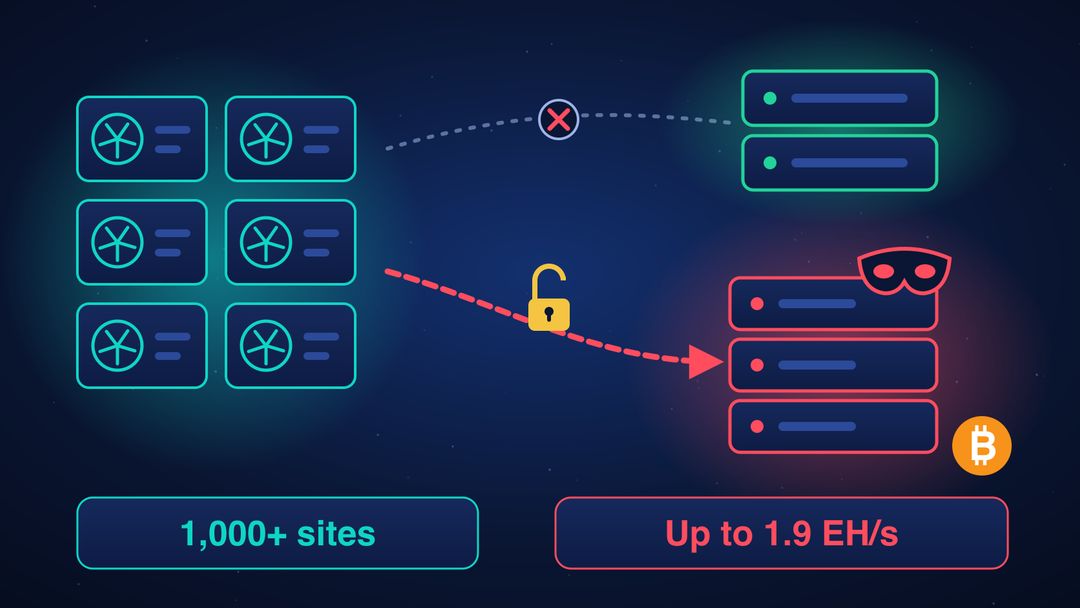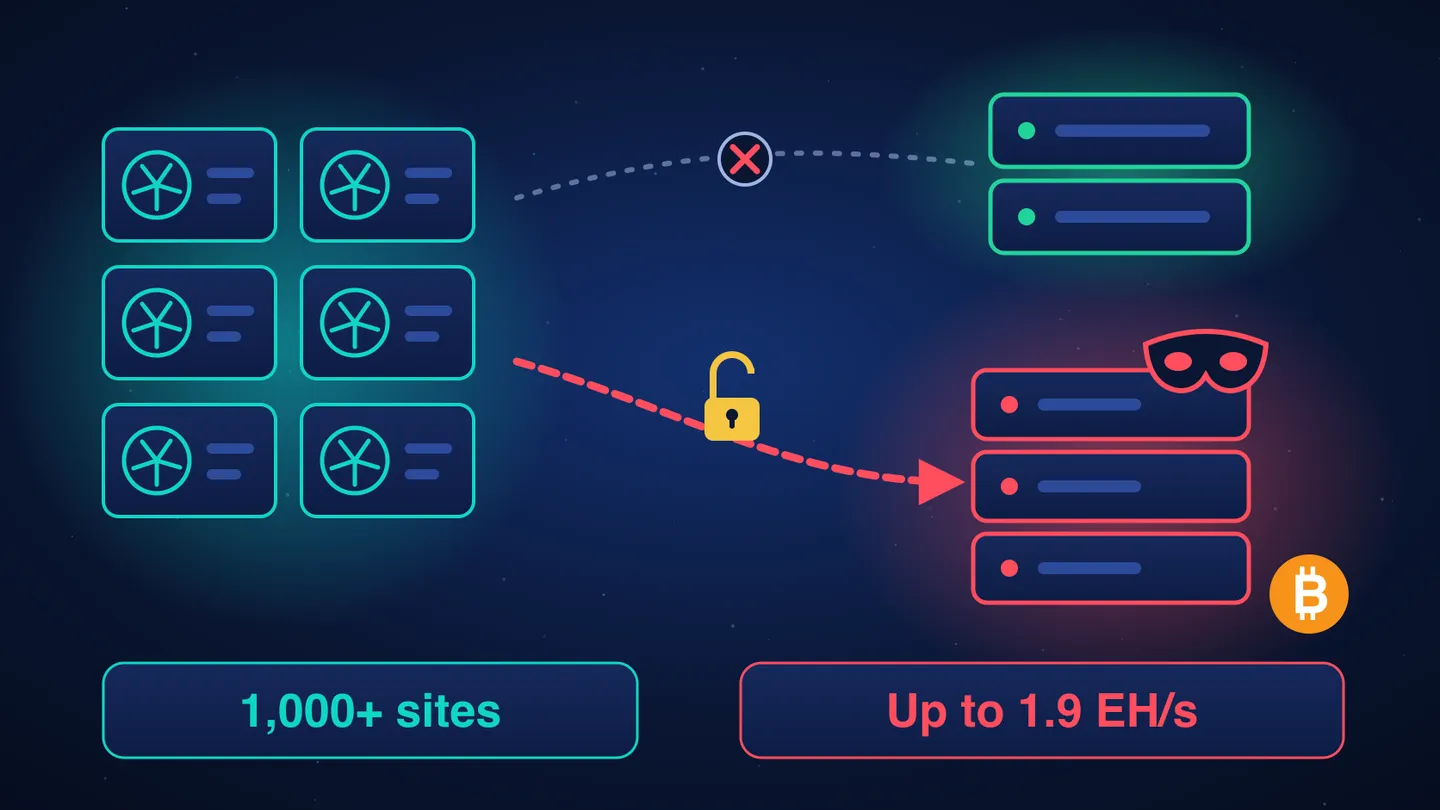
Braiins, a company that runs a Bitcoin mining pool and makes software for miners, said on Wednesday, November 25, 2026 that an attacker has been quietly taking miners’ computing power (their hashrate) by pretending to be a mining pool. On November 20, more than 1,000 mining sites, mostly in Europe, were switched over to the fake pool within a single second. Braiins says its own systems were not broken into and its pool accounts, balances and payouts were not affected.
Key facts
- What happened: the attacker sent miners’ internet traffic to an impostor server that looked like the real pool. The machines kept working normally, but the bitcoin rewards for their work were credited to the attacker instead of to them.
- How big: the diverted computing power grew from under 175 PH/s in early November to as much as 1.9 EH/s on November 20, a more than tenfold rise in about two weeks. Braiins described the attacker as “testing the waters”.
- Where: the first waves earlier in November hit miners in Latin America; the larger wave on November 20 mostly hit miners in Europe.
- The money: Braiins has not said how much bitcoin was taken, and it did not name any other pools that may have been affected.
How the trick works
Most miners still talk to their pool using Stratum V1, a protocol from 2012 that sends data as plain, unencrypted text and gives a mining machine no way to check that it is really talking to its pool. The attacker combined this with a fake internet route announcement: it told parts of the internet that it owned a smaller, more specific block of addresses that included the pool’s server. Routers prefer the most specific route, so networks that did not check where announcements came from sent miners’ connections to the impostor. The fake server then handed out real-looking work and kept the results.
The weakness is not new. In 2014, researchers at Dell SecureWorks described the same routing trick being used to steal about $83,000 in mining rewards over four months. Braiins has warned about this kind of “hashrate hijacking” for years.
A second warning in weeks
This is the second mining hijack reported this month. In mid-November, the mining services company Luxor said attackers had broken into its machine-management software and pointed some clients’ hashrate at another pool. The two attacks worked differently, but in both cases miners kept paying for electricity while someone else collected the rewards.
What Braiins tells miners to do
- Switch to Stratum V2, the newer version, which encrypts traffic and lets a machine confirm it is talking to the real pool.
- If that is not possible, use encrypted Stratum V1 with firmware that checks the pool’s security certificate.
- With an encrypted connection, Braiins says, the attacker earns nothing.
Why it matters
Mining is a business with thin margins, especially with bitcoin near two-year lows. An attack that leaves machines running but silently redirects their rewards is hard to spot and can hit thousands of sites at once, on any pool that still accepts unencrypted connections. The fix already exists, so the main question now is how quickly miners and pools move to encrypted connections.
This article is for information only and is not financial advice.