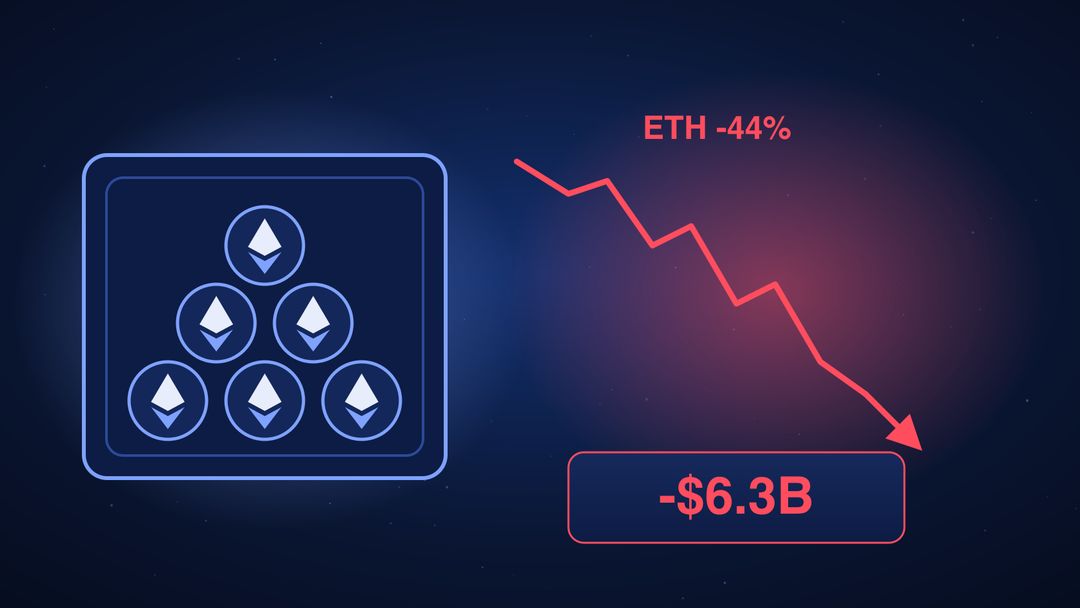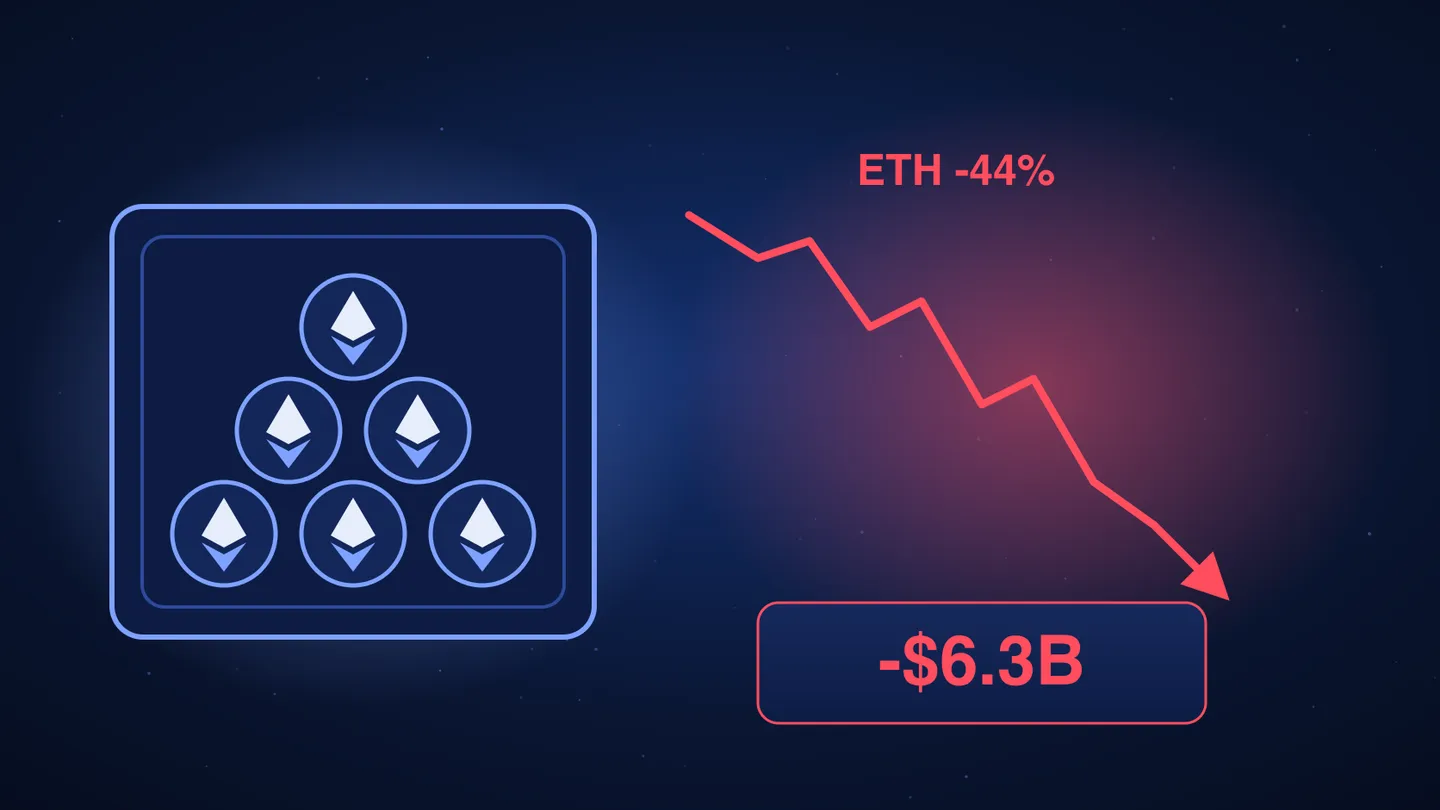
Bitmine Immersion Technologies, the listed company that holds more ether than any other, has reported a net loss of more than $6.3 billion for its fiscal year that ended on August 31, 2026. A year earlier it made a profit of $348.6 million. The figures come from its annual report (Form 10-K), filed with the US Securities and Exchange Commission after the market closed on Tuesday, November 10.
Key facts
- Why the loss: about $6.23 billion of it is an unrealized loss, the drop in value of the ether it holds, which must be marked at market prices. Bitmine did not sell its ether to book this loss.
- Ether’s fall: ether dropped about 44% during the fiscal year, from roughly $4,390 to about $2,466.
- What it holds: at the end of August, Bitmine had about 5.9 million ETH, worth about $14.6 billion at that date, plus 211 bitcoin and about $545 million in cash.
- Still buying: in an update on Monday, November 9, the company said it now holds about 6.07 million ETH, close to 4.97% of all ether in existence.
- Revenue: about $124.8 million for the year, roughly 97% of it from staking (helping to secure the Ethereum network in exchange for rewards paid in ether).
- Share buybacks: during the year it bought back about 20.8 million of its own shares at an average of $17 each.
Context
Bitmine started out as a bitcoin miner and in mid-2025 switched to a strategy of buying and staking ether, paid for mostly by selling new shares. Its chairman, Tom Lee, has set a target of owning 5% of all ether, and has said the company will stop buying once it gets there. With about 4.97% already, it is very close to that limit.
Companies that keep crypto on their balance sheet must report it at its current market price. When prices rise, this shows up as large profits; when they fall, as large losses, even if no coins are sold. Bitmine itself warns in its report that changes in ether’s price will keep causing big swings in its results.
Why it matters
Bitmine is the largest of the “crypto treasury” companies built around ether, and its stock is widely used as a way to bet on ether without buying the coin directly. Its results show how closely such companies follow the coin they hold: a 44% fall in ether turned last year’s profit into one of the biggest paper losses in the sector. Anyone who owns shares in these companies is, in practice, taking on the price risk of the coin itself, often with extra swings on top.
This article is for information only and is not financial advice.