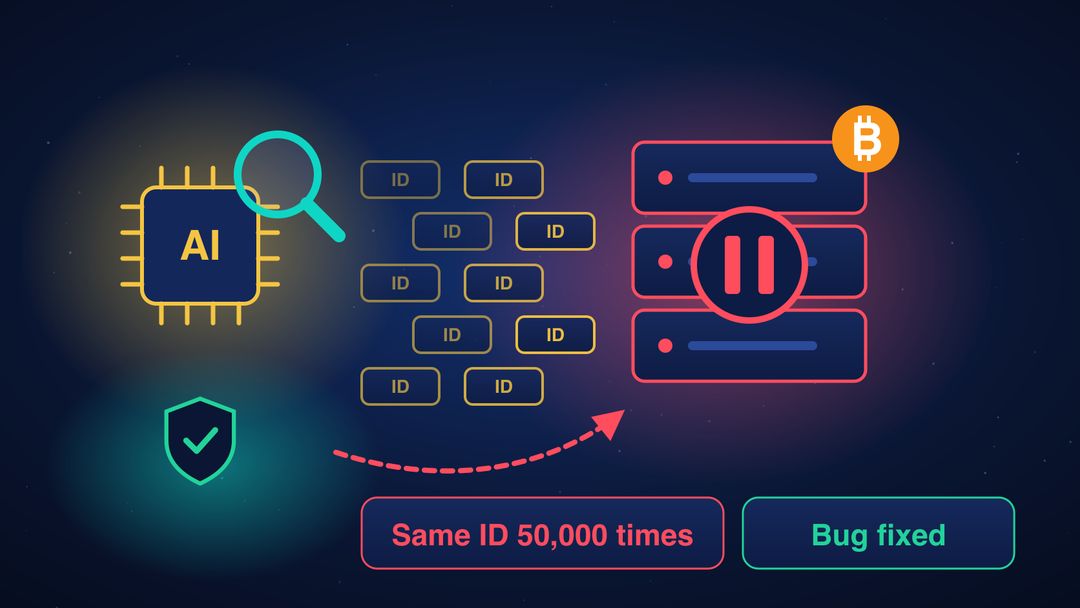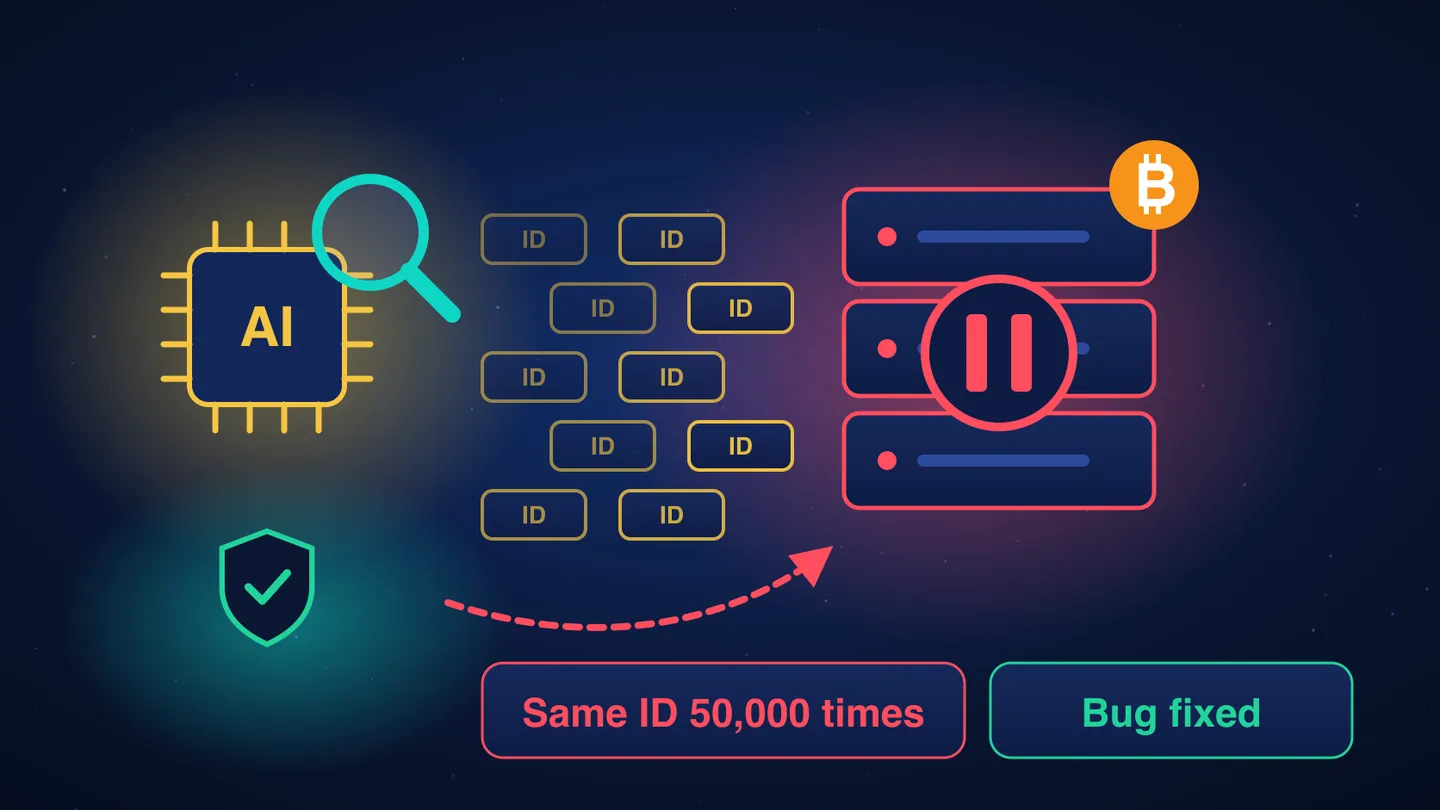
The developers of Bitcoin Core, the software most of the Bitcoin network runs on, disclosed a bug on Friday, November 20, 2026 that let an attacker temporarily freeze a node. A node is a computer that checks and passes on Bitcoin blocks and transactions. The flaw was first reported in July by an automated AI scan. It is now fixed in new versions, and node operators are being told to update.
Key facts
- The bug: Nodes tell each other about new transactions in lists that can hold up to 50,000 entries. Bitcoin Core did not skip repeated entries. An attacker could create one “orphan” transaction (one whose earlier, parent transactions the node has not seen) with thousands of missing parents, then list its ID 50,000 times in a single message.
- The effect: Each such message made the node redo the same costly checks over and over. The node stalled for over a dozen seconds and handled nothing from other peers during that time, new blocks included. Repeated messages could keep it stuck for longer.
- Rating: The developers rated it medium severity and “easily discoverable”. It is tracked as CVE-2026-117348.
- Who is affected: Bitcoin Core versions 29.0 to 29.5, 30.0 to 30.4 and 31.0 to 31.2.
- The fix: Each transaction in a list is now processed only once. The fix is in versions 30.5, 31.3 and 32.1. The 29.x series has reached end of life and will not get a fix, so people still running it need to move to a newer version.
- Not a theft bug: The advisory describes a node being slowed down, not a way to take coins or change anyone’s balance.
How it was found
The advisory credits Project Loupe, run by developer Elias Rohrer at Spiral, the Bitcoin development group funded by Jack Dorsey’s company Block. Loupe uses AI models to scan Bitcoin code for weak spots. It reported the flaw on July 8, 2026. Bitcoin Core developer Gregory Sanders confirmed the finding and passed it to the project’s security team. A second researcher, known as Stutxo, reported the same problem on its own on August 4.
Timeline
- July 8: Project Loupe reports the bug.
- August 4: a second, independent report; Sanders submits a fix.
- August 6: the fix is added to the main code.
- October 27: Bitcoin Core 32.1 is released with the fix.
- November 20: versions 30.5 and 31.3 are released with the fix, and the bug is made public.
Why it matters
Exchanges, miners, wallet services and payment companies all run Bitcoin Core nodes. A node that stops processing blocks, even for a short time, can fall behind the network. That could mean slower deposit confirmations at an exchange, or a miner briefly working from an out-of-date picture of the chain. The bug has been fixed and nothing suggests it was used in an attack. But it is another sign that AI tools are now finding real security flaws in critical financial software. Those tools are open to defenders and attackers alike, which leaves less time between a bug being found and needing a fix.
This article is for information only and is not financial advice.