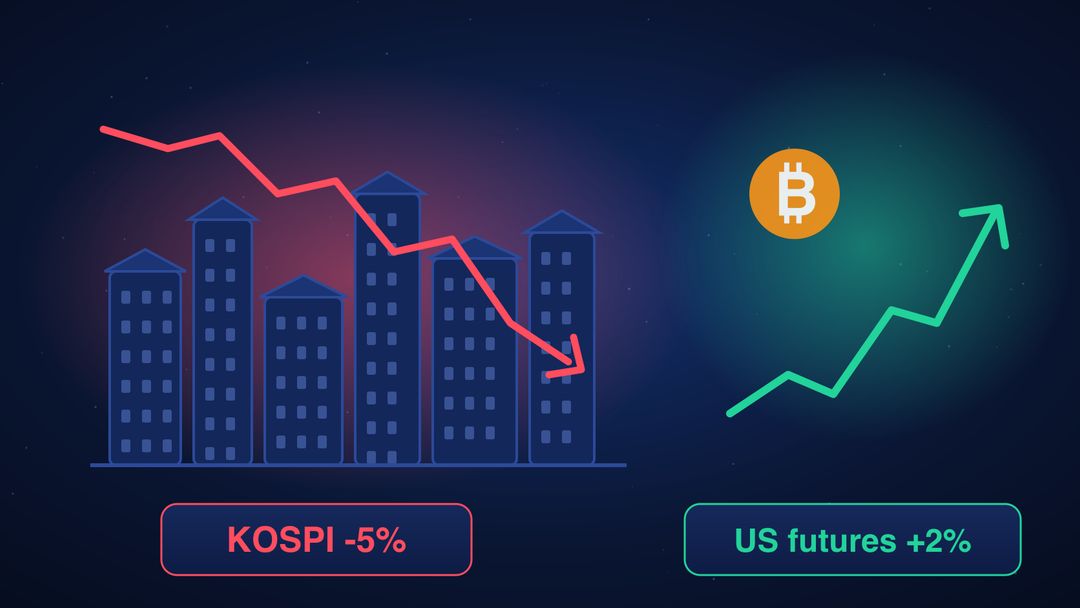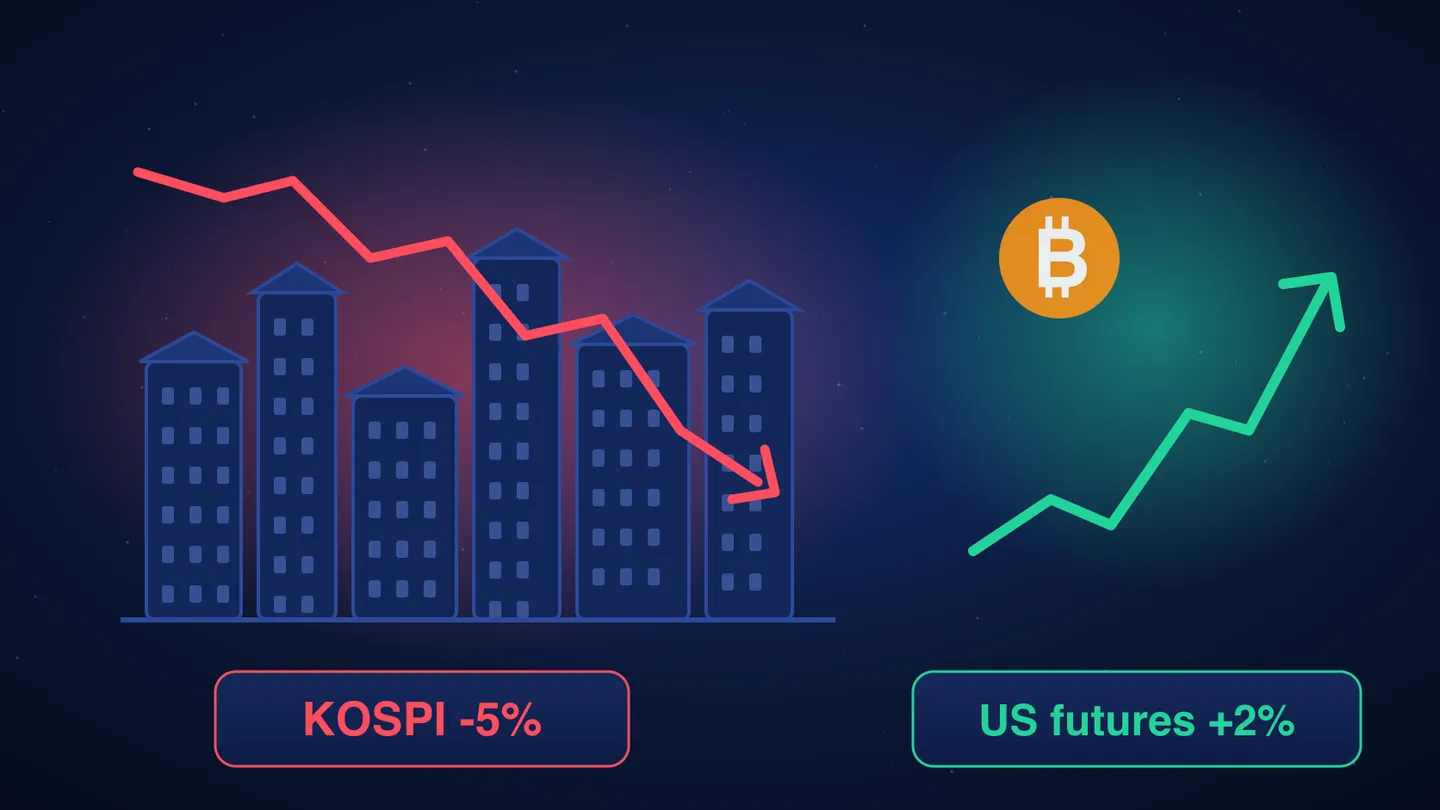
The sell-off in stocks tied to artificial intelligence (AI) spread to Asia on Monday, November 23, 2026. South Korea’s main stock index, the KOSPI, fell about 5% to its lowest level in about 10 months. Stocks in Hong Kong and mainland China also dropped to new multi-month lows. At the same time, US stock futures moved the other way and rose sharply, a sign that some investors expect a rebound on Wall Street after last week’s heavy losses.
Asian trading on Monday began on Sunday evening New York time (ET), which is after midnight GMT.
The key moves
- South Korea (KOSPI): down about 5%, touching a 10-month low of about 4,632. Chipmakers Samsung Electronics and SK Hynix each lost close to 4% or more.
- Hong Kong (Hang Seng): down about 1.5%, with big tech names such as Alibaba and Meituan down about 4%.
- Mainland China: the Shanghai Composite lost about 1.5%.
- Taiwan: steadied and rose about 0.5%, after a 17% fall last week, its worst week since 1990.
- Japan: closed for a public holiday.
- US stock futures: Nasdaq 100 futures rose about 2.5% to nearly 3%, and S&P 500 futures gained about 2%.
Governments step in
- South Korea: after an emergency meeting on Sunday, officials said they are preparing a stock market stabilisation fund that can be switched on quickly if needed. It has not been used since 2008. Companies will be allowed to buy back more of their own shares each day for three months from November 24, and regulators will watch closely for illegal short selling. Finance Minister Lee Hyoung-il said on Monday that the government will decide whether to use the fund depending on how markets behave.
- Taiwan: the financial regulator tightened the rules for short selling on Saturday.
- China: the stock exchanges announced support steps, including making it easier for investors to buy shares with borrowed money.
How we got here
Last week was one of the worst for stocks in years. The Nasdaq fell about 10%, its worst week since March 2020, and both the S&P 500 and the Dow ended Friday in a correction, 10% below their record highs. Investors are worried that the huge, mostly borrowed sums being spent on AI data centres will not pay off fast enough. The mood got worse after Jensen Huang left as Nvidia’s chief executive, and after Anthropic shares fell 8.5% on their second day of trading. Rising interest rates have added to the pressure.
Crypto
Bitcoin also bounced. Early on Monday in Asia it traded around $61,000, up about 3% in a day, after falling below $57,000 on Saturday for the first time in two years. Ether traded around $1,730.
Why it matters
South Korea and Taiwan are home to some of the world’s most important chipmakers, so their markets are a direct read on how investors feel about AI. A fall of about 5% in one day, together with governments preparing emergency support, shows how far the fear has spread beyond the US. The bounce in US futures is a hopeful sign, but futures can change quickly before the New York market opens at 9:30 a.m. ET (14:30 GMT). Crypto has moved closely with tech stocks during this sell-off, so the next moves on Wall Street are likely to matter for bitcoin too.
This article is for information only and is not financial advice.