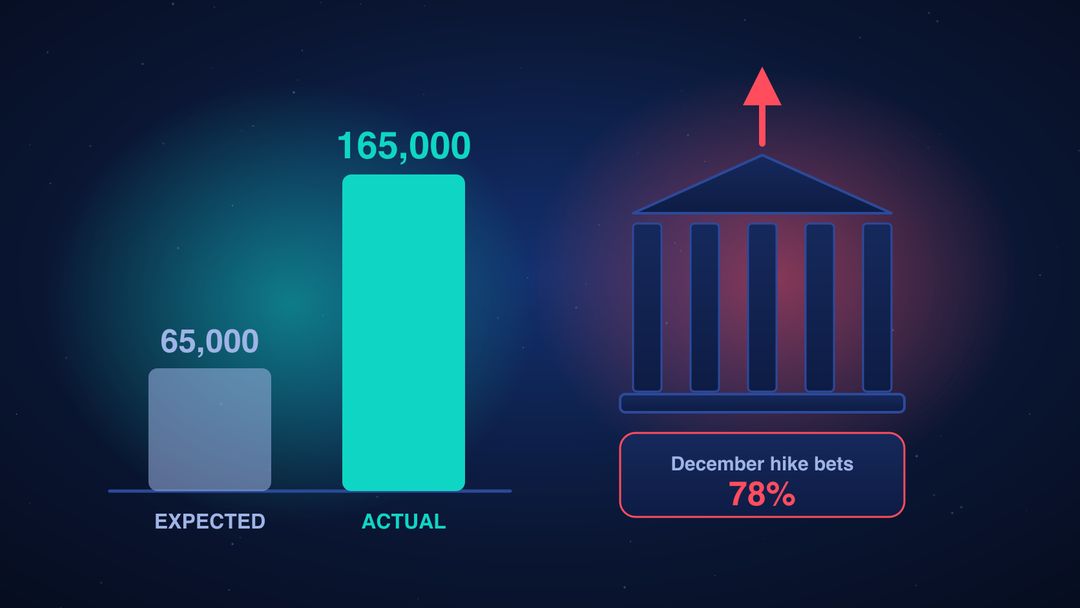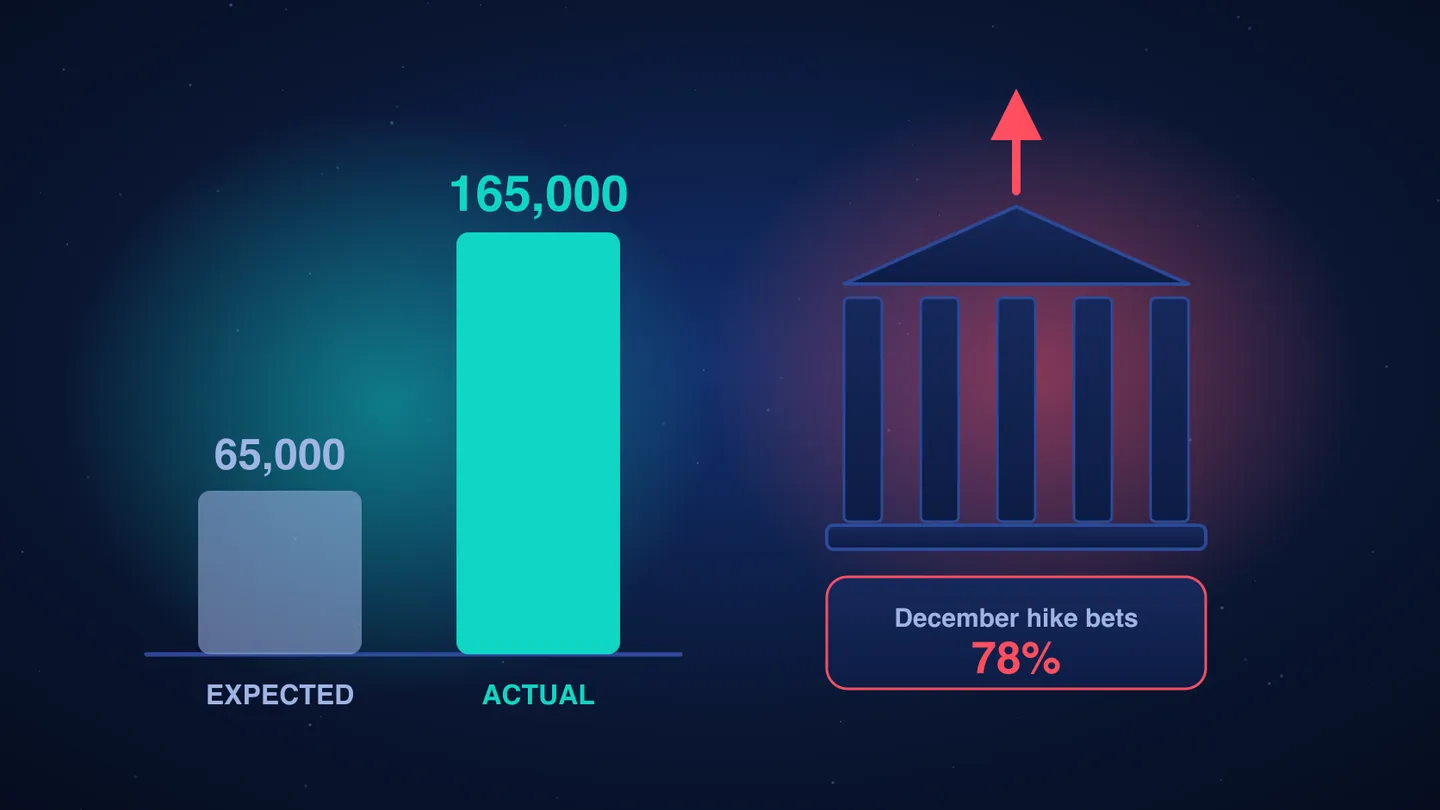
The US job market turned out much stronger than expected in October. Employers added 165,000 jobs, against about 65,000 forecast by economists in a Reuters poll, the Bureau of Labor Statistics reported on Friday, November 6, 2026, at 8:30 am New York time (13:30 GMT).
Good news on jobs is not simple good news for markets right now. The Federal Reserve is worried about inflation, so a strong report makes another interest rate rise more likely.
Key facts
- Jobs added: 165,000, well above the average gain of 48,000 a month over the past year.
- Unemployment rate: 4.1%, down from 4.2% in September on rounded figures. The agency describes this as little changed.
- Wages: average hourly pay rose 0.4% in the month to $38.00, and is up 3.1% over 12 months.
- Earlier months: August was revised up to 186,000 jobs and September to 60,000 from 29,000. Together that adds 84,000 jobs to the earlier count.
- Workweek: unchanged at 34.4 hours.
Where the jobs came from
- Professional and business services: up 70,000, the largest gain.
- Health care: up 42,000.
- Transportation and warehousing: up 25,000, mostly couriers and messengers.
- Manufacturing: up 19,000.
The report also had a softer side. The number of people working part time because they could not get full-time work, or because their hours were cut, rose by 339,000 to 4.8 million.
How markets reacted
Figures from shortly after the New York open:
- Fed bets: the odds of a rate hike in December rose to about 78% from 70% earlier in the day, according to Reuters. Other readings of the same futures data put it near 77%.
- Treasury yields: the 2-year rose to about 4.52% and the 10-year to about 4.87%.
- Dollar: the dollar index gained about 0.7%.
- Stocks: the Nasdaq rose 1.7% and the S&P 500 rose 0.6%, recovering part of Thursday’s heavy losses, while the Dow fell 0.6%.
- Bitcoin: near $75,500, little changed, after falling below $76,000 in Thursday’s sell-off.
What the Fed is saying
The Fed’s rate range is 3.75% to 4.00%. It raised rates in September and held them in October, when two voters wanted another increase.
Officials have sounded firm. New York Fed President John Williams called inflation too high for too long, while saying policymakers should look at incoming data before acting further. Cleveland Fed President Beth Hammack, one of the two who voted for a hike, said she expects policy will need to become restrictive to bring inflation back to 2%.
Why it matters
Higher interest rates make borrowing more expensive and safe bonds more attractive, which tends to weigh on riskier assets such as tech stocks and crypto. Bitcoin is already under pressure after this week’s stock sell-off, so a firmer Fed path would add to the headwinds.
The December decision is not settled. October inflation data arrives next week, and the November jobs report follows on December 4, both before the Fed’s decision on December 9.
This article is for information only and is not financial advice.