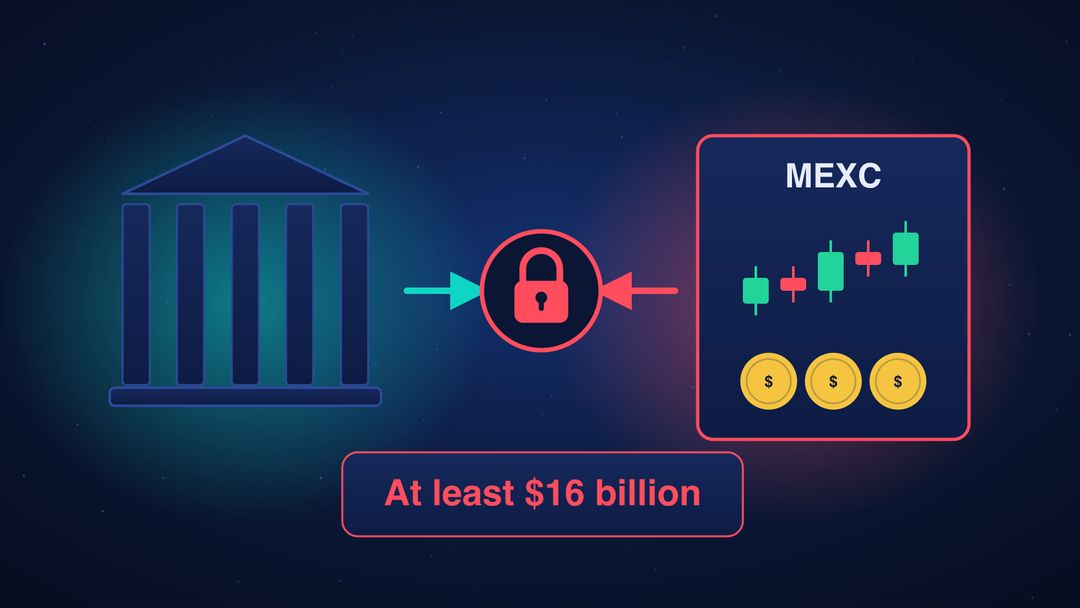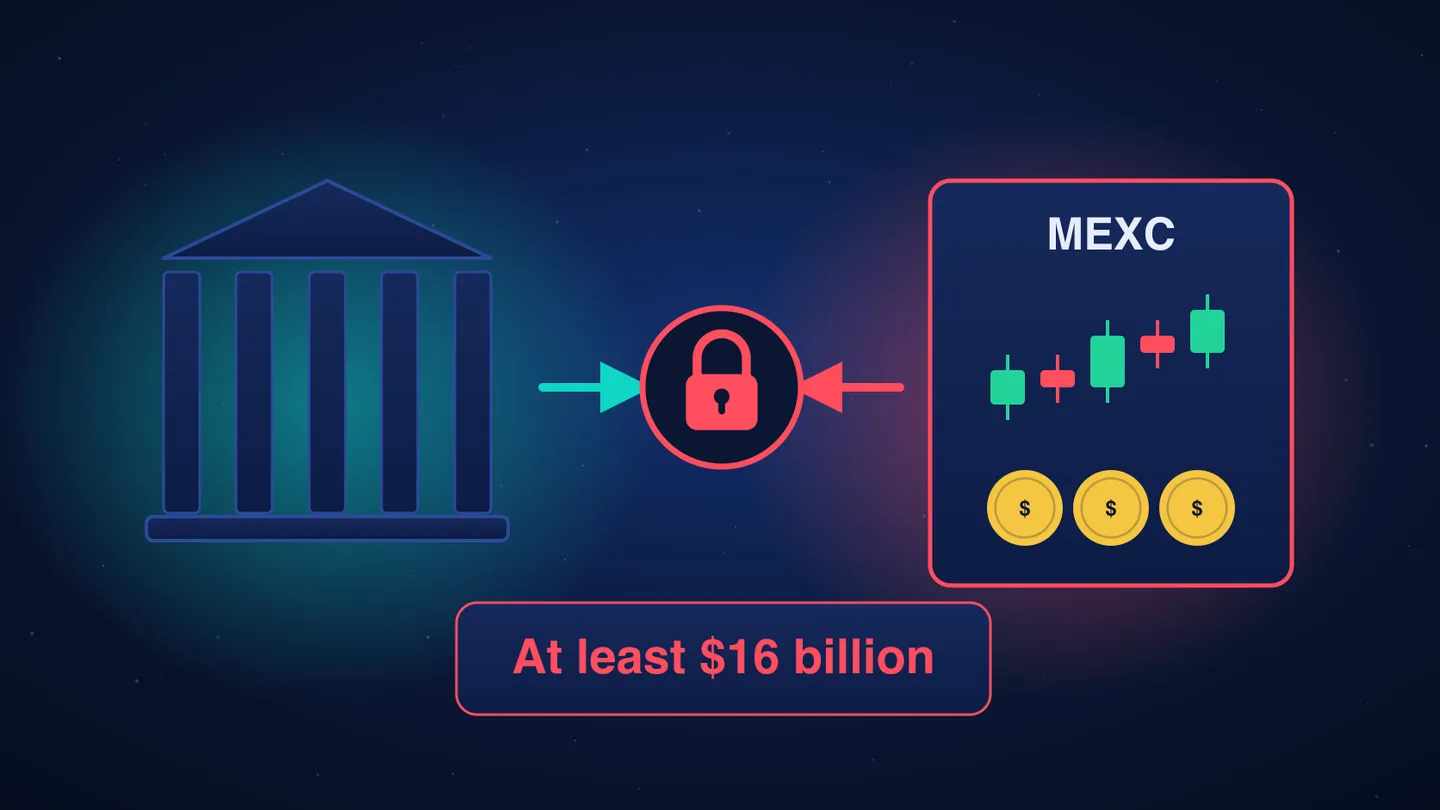
The US government has moved against one of the world’s largest crypto exchanges. On Friday, November 6, 2026, the Treasury’s financial crimes unit, FinCEN, issued an order that effectively cuts MEXC Global off from the US financial system. Treasury says the exchange facilitated at least $16 billion in illicit transactions over five years.
Key facts
- What the order does: it bars US financial institutions from sending funds to, or receiving funds from, MEXC Global.
- When it starts: 30 days after the order is published in the Federal Register.
- The legal basis: section 9714(a) of the Combating Russian Money Laundering Act, a power that lets Treasury act when it finds a primary money laundering concern tied to Russian illicit finance.
- The penalty: institutions that break the order can face civil or criminal penalties.
- The accusation: that MEXC moved money linked to Iranian, North Korean and Russian sanctions evasion, as well as cybercrime, sometimes dealing directly with sanctioned parties.
These are Treasury’s findings in a government order, not a court verdict. We found no public statement from MEXC when this article was written.
The numbers Treasury gives
Treasury’s main figures cover May 2021 to May 2026. Some of them overlap, so they should not be added together.
| What Treasury describes | Amount |
|---|---|
| All illicit activity connected to MEXC | At least $16 billion |
| Direct transactions with more than 40 Iranian crypto exchanges | About $1 billion |
| Linked to Russian sanctions evasion | Nearly $1.5 billion |
| Direct deals with entities sanctioned by the US, EU and UK (part of the Russian total) | $232 million |
| Connected to the A7A5 stablecoin | Almost $200 million |
| Benefiting the Russia-based A7 network | At least $26 million |
| For Iran’s central bank and the Revolutionary Guards, including the Qods Force | About $22 million |
Treasury’s statement gives no separate figure for North Korea. It also says MEXC served as a hub for ransomware and scam payments and for darknet market activity, without an amount for those.
One detail stands out. Treasury says MEXC was still processing transactions with the Russian exchange Garantex and its successor Grinex as recently as June 2026, more than four years after the US sanctioned Garantex in April 2022.
Who is MEXC?
MEXC Global was founded in 2018 and is headquartered in the Seychelles. Treasury ranks it among the top 20 crypto exchanges in the world. As of September 2026, Treasury says, it was processing more than $1 billion a day and held about $5 billion in reserves, with more than 3,000 cryptocurrencies and tokenized assets on offer.
The exchange’s own rules ban users in places such as Iran and North Korea. Treasury’s point is that those rules did not work in practice: it says “severe deficiencies” in MEXC’s anti-money-laundering controls let people in those places use the platform anyway.
What the order does not do
The order is aimed at US financial institutions rather than at MEXC’s customers directly, and Treasury’s statement does not mention customer funds. It also leaves banks’ existing duties in place, including reports of suspicious activity, and it does not change any sanctions run by the Treasury’s sanctions office, OFAC.
Why it matters
MEXC is far from a small operator. The order shows Treasury is willing to use this power against one of the largest exchanges in the world. It is also a warning to other offshore platforms that a written rulebook is not enough if the checks behind it fail.
Treasury’s message was mostly about Iran. “Financial institutions cannot have it both ways: Either you support the Iranian regime, or you have access to the U.S. financial system,” said Treasury Secretary Scott Bessent.
The next step to watch is publication in the Federal Register, which starts the 30-day clock.
This article is for information only and is not financial advice.