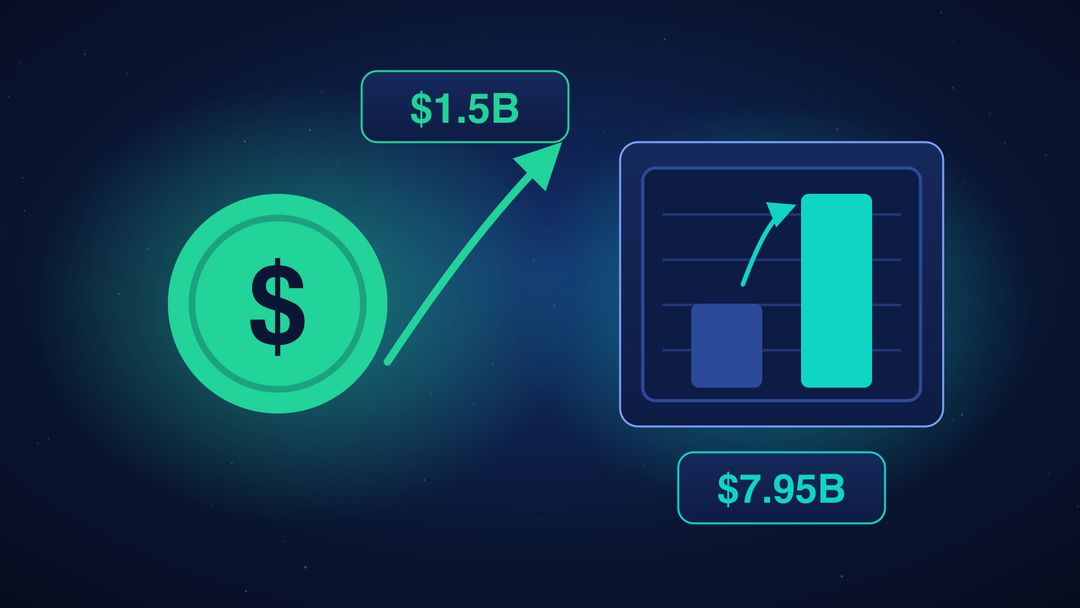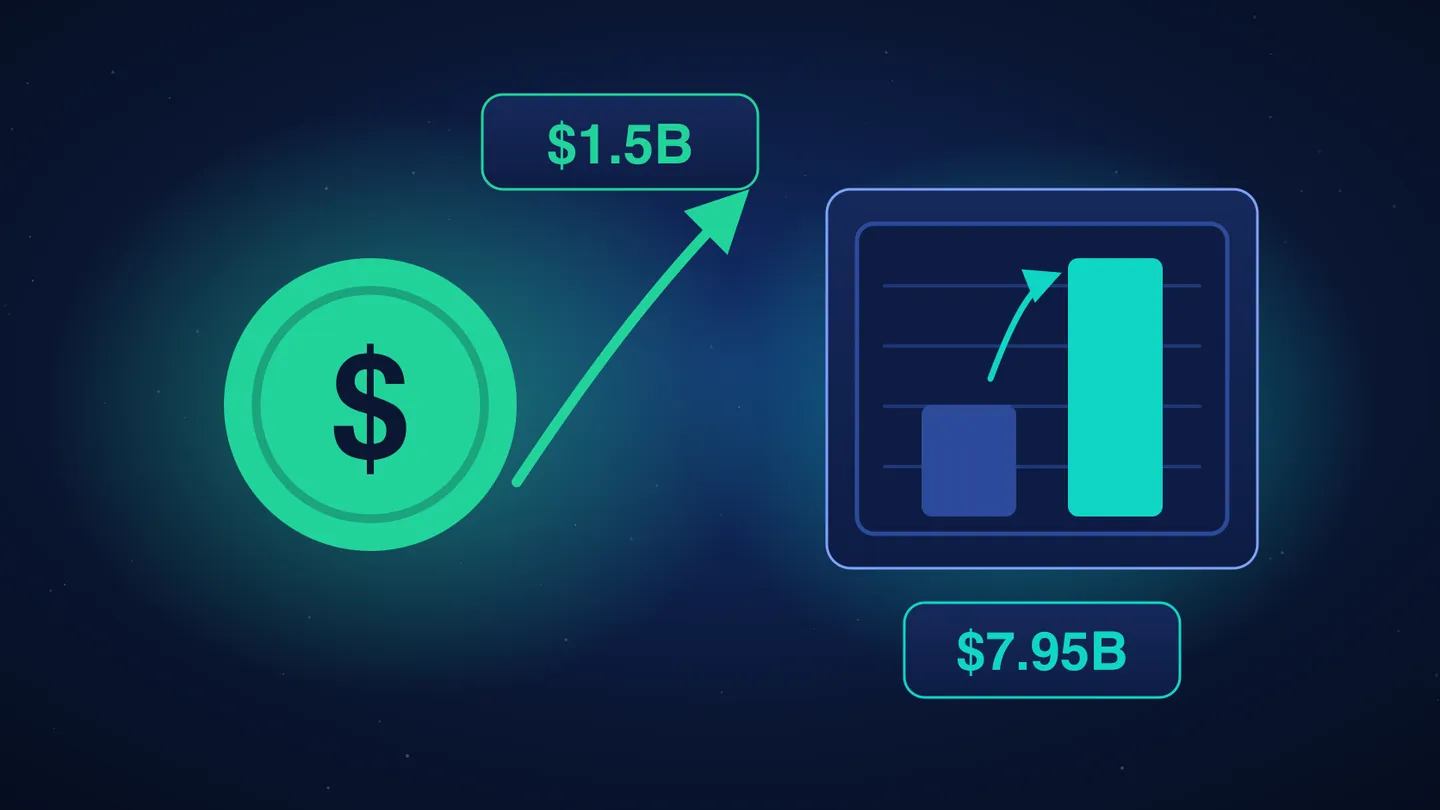
Tether, the company that issues USDT, the world’s largest stablecoin, published its report for the third quarter of 2026 on Friday, October 30. The numbers, checked by the accounting firm BDO, show a profit of $1.5 billion for the quarter and a “reserve buffer” that grew from $4.1 billion to $7.95 billion in three months.
Key facts
The figures describe Tether’s position on September 30, 2026:
- Net operating profit: $1.5 billion in the third quarter, about the same as in the second quarter, and $4.5 billion for the first nine months of the year.
- Reserve buffer: $7.95 billion, up $3.8 billion from $4.1 billion at the end of June.
- Total assets (reserves): $191.5 billion.
- Total liabilities: $183.5 billion, almost all of it the USDT tokens held by users.
- USDT in circulation: about $184 billion, broadly unchanged since the start of the year.
- US Treasury bills: $132.4 billion, held directly and indirectly.
What the reserve buffer is
Every USDT is meant to be worth one US dollar, and holders can swap it back for dollars through Tether. To make that promise believable, Tether keeps assets (reserves) worth at least as much as all the USDT in circulation. The buffer is what is left over after covering every token: the assets minus the liabilities. A larger buffer means Tether could absorb bigger losses on its investments and still pay back every holder. Tether says the buffer is there to support withdrawals when markets are under stress.
Where the profit comes from
Most of Tether’s income comes from interest on the safe, short-term US government debt it buys with the dollars it receives, mainly Treasury bills and short loans backed by Treasuries (reverse repurchase agreements). USDT holders do not earn this interest; Tether keeps it.
The report is an attestation: an accounting firm checks the figures on one date, which is less than a full audit of the company’s books.
Why it matters
USDT is used for a large share of crypto trading around the world, so trust in its backing matters far beyond Tether itself. A thicker cushion above what it owes makes the stablecoin sturdier in a crisis. With about $132 billion in Treasury bills, Tether is also now one of the bigger buyers of US government debt, which ties the crypto market more closely to the traditional financial system.
This article is for information only and is not financial advice.