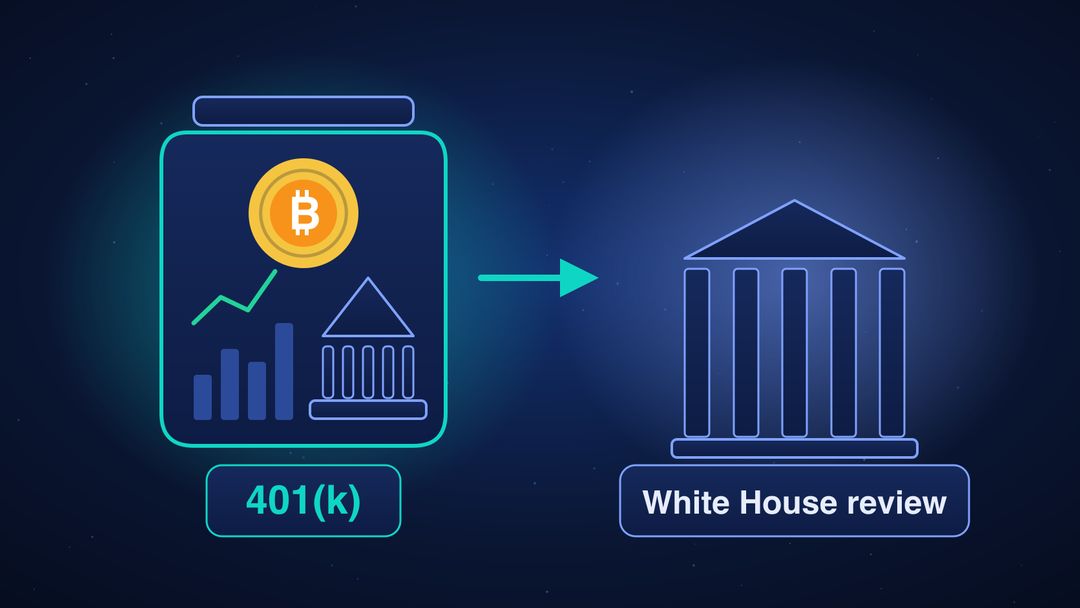
Crypto is one step closer to a place in American retirement plans. On Thursday, November 5, 2026, the US Department of Labor sent its final rule on “alternative assets” in 401(k) plans to the White House’s Office of Information and Regulatory Affairs (OIRA), the office that reviews major rules before they are published. Alternative assets include private equity, real estate and funds that invest in crypto.
Key facts
- What was sent: the final version of a rule called “Fiduciary Duties in Selecting Designated Investment Alternatives”, written by the department’s Employee Benefits Security Administration.
- Where it stands: under review at OIRA, part of the White House budget office. There is no fixed date for the review to end.
- What comes next: once cleared, the rule is published in the Federal Register, which sets the date it takes effect.
- Where it comes from: President Trump’s executive order of August 7, 2025, which told the department to make it easier for 401(k) plans to offer alternative assets.
- The text is not public yet. The details below come from the draft the department published on March 31, 2026. The final version may differ.
What the draft rule does
The rule does not order any plan to add crypto. It speaks to the people who choose a plan’s investment menu, usually the employer, who by law must act prudently in savers’ interest.
- A “safe harbor”: a fiduciary who follows a careful, documented process is treated as having acted prudently. Fear of lawsuits is a big reason most plans have avoided alternatives so far.
- Six factors to weigh: performance, fees, liquidity, valuation, benchmarking and complexity.
- How crypto fits in: the list of alternative assets covers “actively managed investment vehicles that are investing in digital assets”, so funds rather than coins held directly. It also names private companies, real estate, commodities, infrastructure and lifetime income products.
- Brokerage windows are left out: the rule covers the menu a plan picks for its members, not self-directed brokerage accounts where savers choose investments themselves.
The numbers
The draft counts about 721,000 plans where savers choose their own investments, with roughly 118 million participants and more than $8.8 trillion in assets, as of 2023. Even a small share of that money moving into crypto funds would be large next to today’s crypto fund market.
Not everyone agrees
Senators Bernie Sanders and Elizabeth Warren have urged the department to drop the rule, saying it would expose retirement savers to volatile assets. The department has also said it is still weighing the costs.
It reverses the earlier direction. In 2022 the department warned plans to take “extreme care” before offering crypto. It withdrew that warning in May 2025.
Why it matters
401(k) plans are where most working Americans save for retirement, so opening them to crypto funds could bring in a steady new flow of long-term money. For now, though, nothing changes for savers: the rule still has to clear review and be published, and then each employer decides whether to add such options at all.
This article is for information only and is not financial advice.