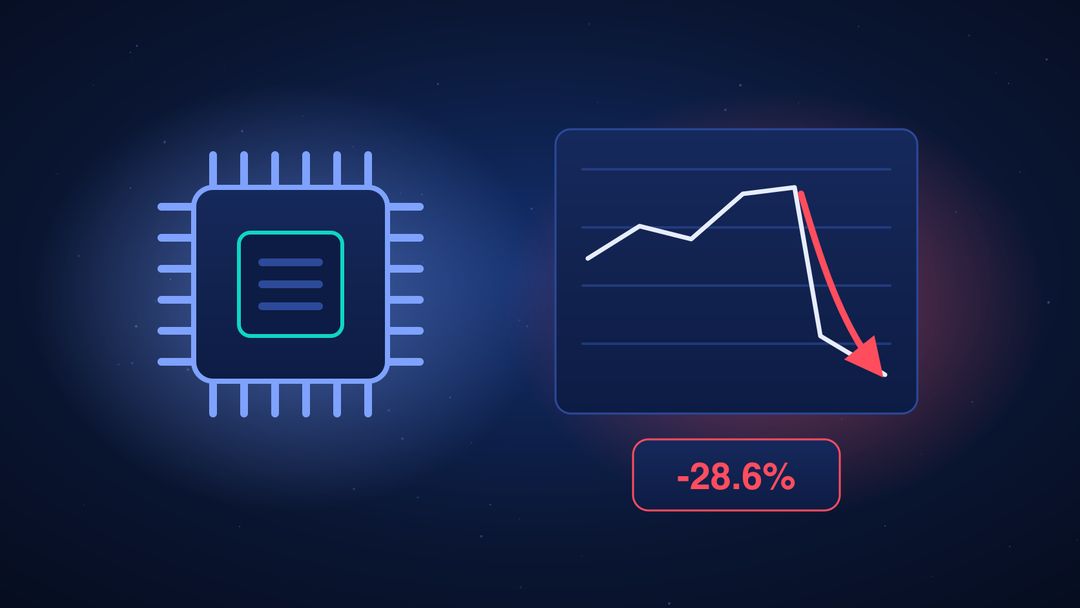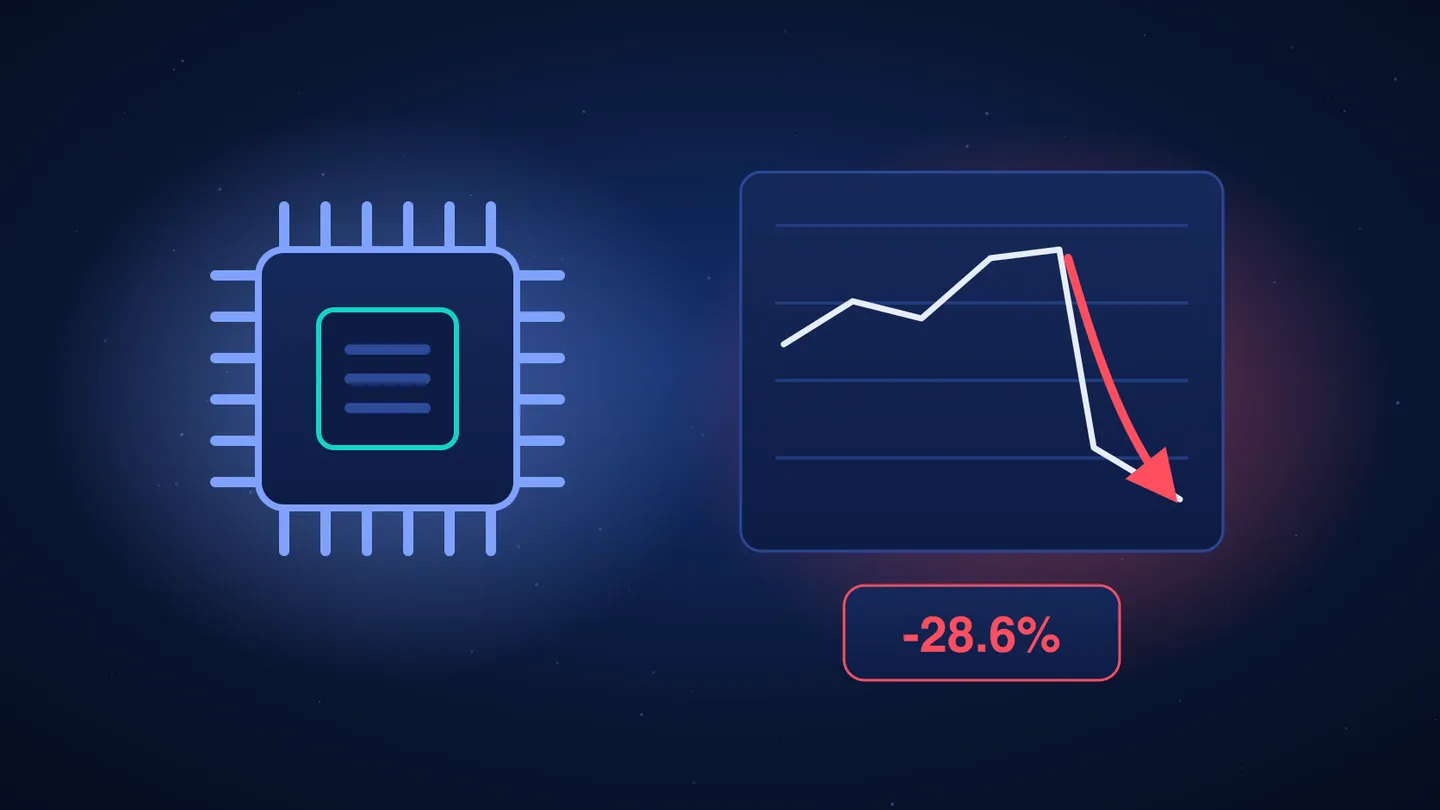
Chipmaker Intel (Nasdaq: INTC) reported its third-quarter 2026 results after the US market closed on Thursday, October 29. The quarter itself was better than the company had promised, but its forecast for the next three months was well below what investors expected. On Friday, October 30, the stock closed at $65.76, down 28.6% from $92.07, its worst day in decades. About $140 billion of market value disappeared in one session.
The quarter in numbers
For the three months to September, compared with the same quarter of 2025:
- Revenue: $16.5 billion, up 21%.
- Data center and AI chips: $7.3 billion, up 78%, the strongest growth in this business in 15 years, according to the company.
- PC chips: $8.1 billion, down 5%.
- Contract chip manufacturing (Intel Foundry): $6.7 billion, up 58%.
- Adjusted earnings per share: $0.52, up from $0.23 and above Intel’s own target.
- Net income (official accounting): $3.3 billion, down 18%.
The forecast that worried investors
For the fourth quarter (October to December), Intel expects:
- Revenue of $15.0 to $16.0 billion, lower than in the quarter just reported and below what analysts had expected.
- Adjusted earnings of $0.25 per share, about half of the third quarter’s $0.52.
- Adjusted gross margin of 38%, down from 44.1%.
The company gave three main reasons:
- PCs are selling less. Intel says the PC slowdown will last at least through the first half of 2027.
- It cannot make enough server chips. Demand for its Xeon data center processors is strong, but production and packaging capacity are limited.
- A problem at a factory in Israel is expected to cut about $300 million from fourth-quarter sales.
On the call with analysts, finance chief David Zinsner also said Intel will probably not produce positive free cash flow (cash left after investment spending) next year, as it keeps spending on new factories.
Why it matters
Intel is one of the largest US chip companies and part of major indexes such as the S&P 500, so a drop this size hits many index and pension funds. It also pulled down other chip stocks such as AMD on the same day. The results show a split that is now common in tech: demand for chips used in AI data centers is booming, but the rest of the business, here the PC market, is getting weaker. Large sell-offs in tech stocks often spill over into crypto, as the two tend to move together.
This article is for information only and is not financial advice.