BlackRock, the world’s largest asset manager, has asked the U.S. Securities and Exchange Commission (SEC) to approve a new kind of Bitcoin fund: the iShares Bitcoin Managed Protection ETF, which would trade under the ticker PBIT. The filing was made on Monday, October 19.
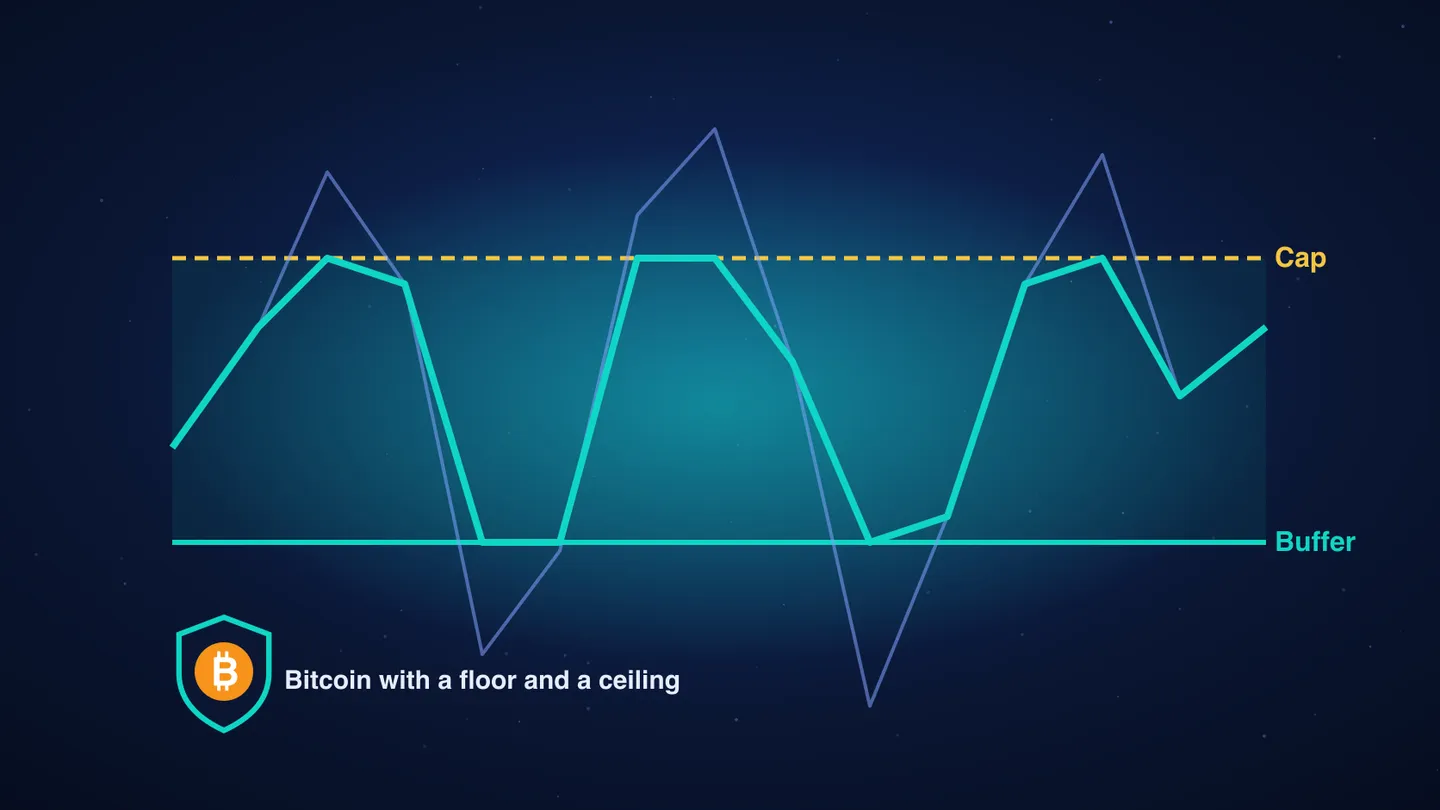
The idea is simple: give investors part of Bitcoin’s upside while cushioning some of the downside. In exchange, gains are capped.
How the “buffer” works
PBIT would not hold Bitcoin itself. Instead, it would use options on BlackRock’s existing spot Bitcoin fund, IBIT:
- Upside: the fund buys call options on IBIT and sells higher-priced calls to pay for them. This gives exposure to Bitcoin’s rise — but only up to a limit (the “cap”).
- Downside: protection usually starts at around 90% of the starting value, so the first ~10% of losses (before fees) are on the investor. Beyond that, the fund is designed to absorb further drops.
- Rolling tranches: the fund runs three overlapping tranches with staggered monthly start dates. Each month one expires and a new one begins, with a cap set by market conditions at that moment.
- Interest: part of the fund sits in fixed-income investments that earn interest.
The filing gives BlackRock broad freedom to change both the cap and the protection level, so investors should not count on a fixed outcome. The management fee has not been disclosed yet.
Not the first, but the biggest name
Buffered or “defined-outcome” Bitcoin funds already exist from firms such as Calamos, First Trust and Innovator. According to Bloomberg Intelligence analyst James Seyffart, this is BlackRock’s third Bitcoin ETF filing — and when BlackRock enters a market, it usually does so in a big way. For now, the firm’s crypto products cover only Bitcoin and Ethereum.
IBIT stands alone on inflows
On the same Monday, IBIT took in $665.2 million — the only one of the 12 U.S. spot Bitcoin ETFs with net inflows, according to SoSoValue data. Fidelity’s FBTC lost $83.6 million and Grayscale’s GBTC lost $54.9 million, leaving the group with $526.6 million in net inflows for the day.
The rebound came after a weak stretch. Over the previous two weeks, spot Bitcoin ETFs lost about $910 million, as hotter-than-expected inflation data revived talk of another Federal Reserve rate hike. Through Friday, the funds were down roughly $615 million for October.
The bigger picture
- IBIT is the largest spot Bitcoin ETF, with $66.37 billion in net assets.
- Since launching in January 2024, U.S. spot Bitcoin ETFs have attracted $57.4 billion in cumulative net inflows and now hold $105.46 billion in assets.
Why it matters
A buffer ETF from BlackRock could bring Bitcoin to more cautious investors — people who want some exposure but can’t stomach a 50% drawdown. The trade-off is real, though: in a strong rally, a capped fund will lag far behind simply holding Bitcoin. Before buying any product like this, it’s worth understanding exactly where the cap and the protection start.
This article is for information only and is not financial advice.